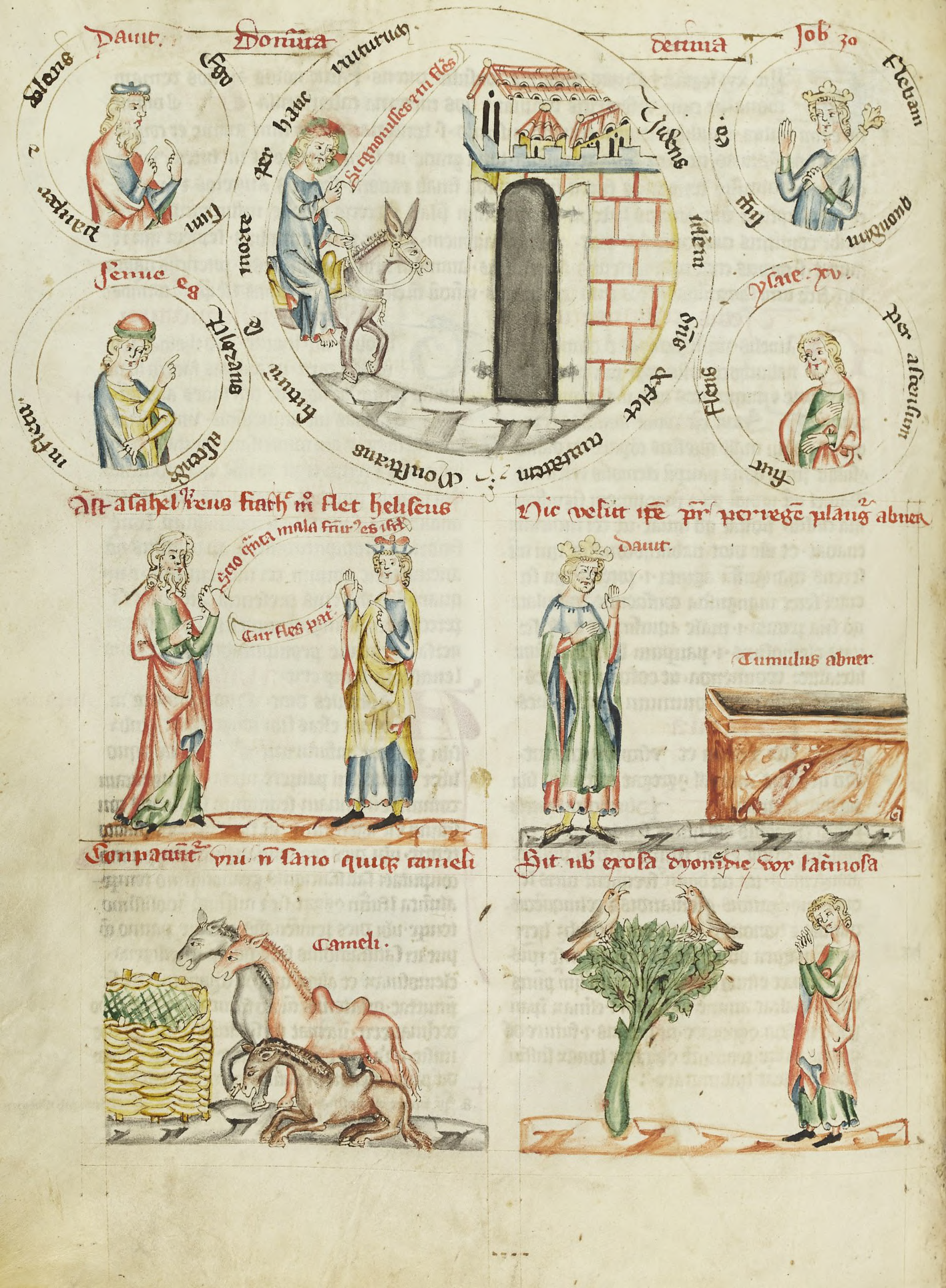
 Ninth Sunday after PentecostBy Udalricus Campiliensis († c. 1358)(AI Translation)
Luke, chapter 20, records that Jesus, seeing the city of Jerusalem, wept over it. For the Lord wept not over the ruin of an earthly city, but over the damnation of sinful souls. Hence it is said there: They shall surround you — for you shall be in tribulation, and they shall press you hard — through impenitent perseverance, which is accompanied by the anguish of conscience — and they shall lay you low in the dark earth of hell, in death. And the reason follows: because you did not know, and would not deign to know, the time of the most merciful God visiting you. This anger shall come especially upon clerics and religious, so to speak, to silence the lost ardor of inward devotion, the love of God drawn away toward earthly things, and the good example withdrawn from those nearby. For the city is the great dwelling of the gifted, the heart of souls, the highest home of angels.
Old Testament (left)
In the fourth book of Kings, chapter five, it is written that Elisha, seeing that Hazael was to become king, wept over him, because he would do evil to the people. For the Lord wept — he wept over what was yet to come — on account of the sudden slaughter to follow. So Elisha foresaw the oppression of the people by Hazael. Elisha is interpreted as the salvation of my God, and signifies Christ, who was sent to abolish the misery of the people. Hazael, meanwhile, is interpreted as the creation of God, and signifies one who is humble and devout, who keeps the will of the Lord at all times. This Hazael, raised to secular dignities, is mourned by Elisha — for it almost never happens that one promoted to the governance of high office is not thereby changed in his ways and in his inward affections. For bishops, even those set within such a city without its particular warfare, must by their very nature undergo transformation.
Old Testament (right)
In the second book of Kings, chapter three, it is written that David wept over the tomb of Abner. For the Lord wept over the utter destruction of the life of David himself; and so David mourned over Abner with great excess of grief. David is interpreted as the great one who makes firm, and signifies Christ, upon whom the angels look and toward whom they are drawn together. Abner, meanwhile, is interpreted as the lamp of the father, and signifies clerics and religious, who ought to be the lamp of God the Father by giving good example and directing both themselves and others toward what is good. And because this lamp — that is, the exemplary life of clerics and religious — is not merely extinguished but buried, the Lord therefore raises lamentation over them and over the people. For the reason that religious and clerics are no longer honored as they once were, but are held in contempt, is simply this: that truly devout and genuinely religious profession is now scarcely to be found, as it has been for some time.
Nature (left)
The Book of Natural Things says: when one camel falls sick, the rest cease to feed; and though they suffer, they will not eat. The camel is a beast of burdens, and may signify the just Jєωιѕн people, heavily laden with the weight of the divine law. And this camel — that is, the people — grew sick when it gave itself over in some measure to carnal pleasures, and did not recognize this sickness within itself. But the true camel, Christ, rightly burdened with the weight of all the world, took compassion upon that camel — not upon the Jєωιѕн people alone, but upon the languor of all — and withdrew, permitting himself to go up alone onto the mountain, abstaining not merely from bodily food but from all earthly things. Wherefore it is rightly granted to those who suffer in patience to show compassion, so that penitents may rejoice and be preserved from vice.
Nature (right)
Solinus says: the royal bird of Diomedes, when it squawks, signals either a change of place or the gathering of the flock. This royal bird is born of noble flesh, sprung from royal lineage, and raises its voice in song at the moment when, mourning over life, it weeps. What its song signifies, the Lord has shown more plainly. For the change of place he signified when he said: Your enemies shall surround you; and the gathering of the flock — that is, the imitation of the people — when he said: and the children who are within. And this final sign is the weeping and the testing of the people's exile. We must therefore pray fervently that this bird may not make its trembling voice heard over us — that it may not sing to us softly and sweetly — when the Lord comes.

 Topic: Concordantiae Caritatis (Read 6514 times)