Send CathInfo's owner Matthew a gift from his Amazon wish list:
https://www.amazon.com/hz/wishlist/ls/25M2B8RERL1UO

Author Topic: PUZZLE -- Falling Raindrops  (Read 5589 times)

0 Members and 1 Guest are viewing this topic.

Re: PUZZLE -- Falling Raindrops
« Reply #15 on: September 10, 2018, 03:07:11 AM »
See if you can figure out what these seven words all have in common?
1. Banana
2. Dresser
3. Grammar
4. Potato
5. Revive
6. Uneven
7. Assess

...
Correct but not... specific enough for a gold star.
.
Gold Star answer:
.
These words can each be changed to the same word written BACKWARDS, 
           by taking the first letter and putting it at the end:
.
1. ananaB
2. resserD
3. rammarG
4. otatoP
5. eviveR
6. nevenU
7. ssessA
;)                                                                            

Re: PUZZLE -- Falling Raindrops
« Reply #16 on: September 10, 2018, 03:13:19 AM »
On a clear day, there are no raindrops.
.
Thank you, TKGS, for demonstrating critical reading skills. 
.
Now let's demonstrate some critical THINKING skills....... Which raindrops are larger?
.
BTW, the next time it rains at night, stand under a shining street light and watch the raindrops falling with the light shining on them.
.
It's even more obvious using binoculars, even at close range. 
.
Observe the relative SIZES of the drops, and how fast they ALL fall -- 
         -- how fast the large drops fall, and how fast the smaller drops fall.
.
While the reality can be observed empirically (like by watching this way) it takes analytical detail to discover the REASON this is so.
.
I'll give it one more day before I propose a definitive explanation -- not saying it answers all the questions, but it seems to do well.


Re: PUZZLE -- Falling Raindrops
« Reply #17 on: September 10, 2018, 03:27:57 AM »
.
So far this thread has 3 puzzles going that have not been answered all right, or completely:
.
Which raindrops fall faster, the small ones or the large ones?  <--- (The OP)
.
A baseball is tossed upwards into the air.
Which takes longer, its flight up or its drop back down?
.
A large stone is 100 times heavier than a small rock, but when dropped at the same time, they fall with the same acceleration (ignoring air resistance). Why doesn't the large stone accelerate faster? Is it because of its weight, its energy, its surface area or its inertia?
.
.
I'd be glad to post my solutions but I don't want to spoil anyone's fun!
.
In the meantime, here's another one!  ::)
.
CORK IN A GLASS                                                       ...btw a refutation of flat-earthers' canard that "water does not bend"...
.
You have no doubt observed that a cork will always drift over to the side of a water glass and stay there. Can you think of a way to make the cork float in the middle of the glass without touching either the cork or the glass?
.
.
Regarding this last one, if you don't have a cork, that's no problem. All you need is a glass of water and a metal or plastic bottle cap (like the one from your last bottle of beer or soda or filtered water). With the glass less than full, so you can see the surface of the water reflecting a light beyond the glass, place the bottle cap into the glass of water, carefully, so as to not let any water get into the cap. Then stand still and watch. The cap will slowly drift to the side of the glass. Notice as it approaches the glass wall, the cap ACCELERATES. This is very important to see happening. You can try bumping the cap with a pencil or your finger to make it stay in the center if you want to experiment, but to solve the puzzle you can't be touching the cap with anything like that. There is another answer and it is DEFINITIVE about the curvature of the surface of water like this.

Re: PUZZLE -- Falling Raindrops
« Reply #18 on: September 10, 2018, 03:50:52 AM »
.
ETA:
IN FACT, there is a further clarification to be observed. The cap will not remain for very long in the center before it drifts to the edge, perhaps a minute or two. But it eventually drifts over to the edge with ACCELERATION, like a falling object falls faster. Once the cap touches the glass edge, it stays there as if drawn by an unseen force, and there IS an unseen force! Furthermore, while the cap remains there at the edge of the water, it is possible to cause the cap to return to the very CENTER of the water circle by doing one specific thing, and it does not entail touching the glass or the cap with your finger or a pencil or anything else like that. 

Re: PUZZLE -- Falling Raindrops
« Reply #19 on: September 10, 2018, 04:29:44 AM »
.
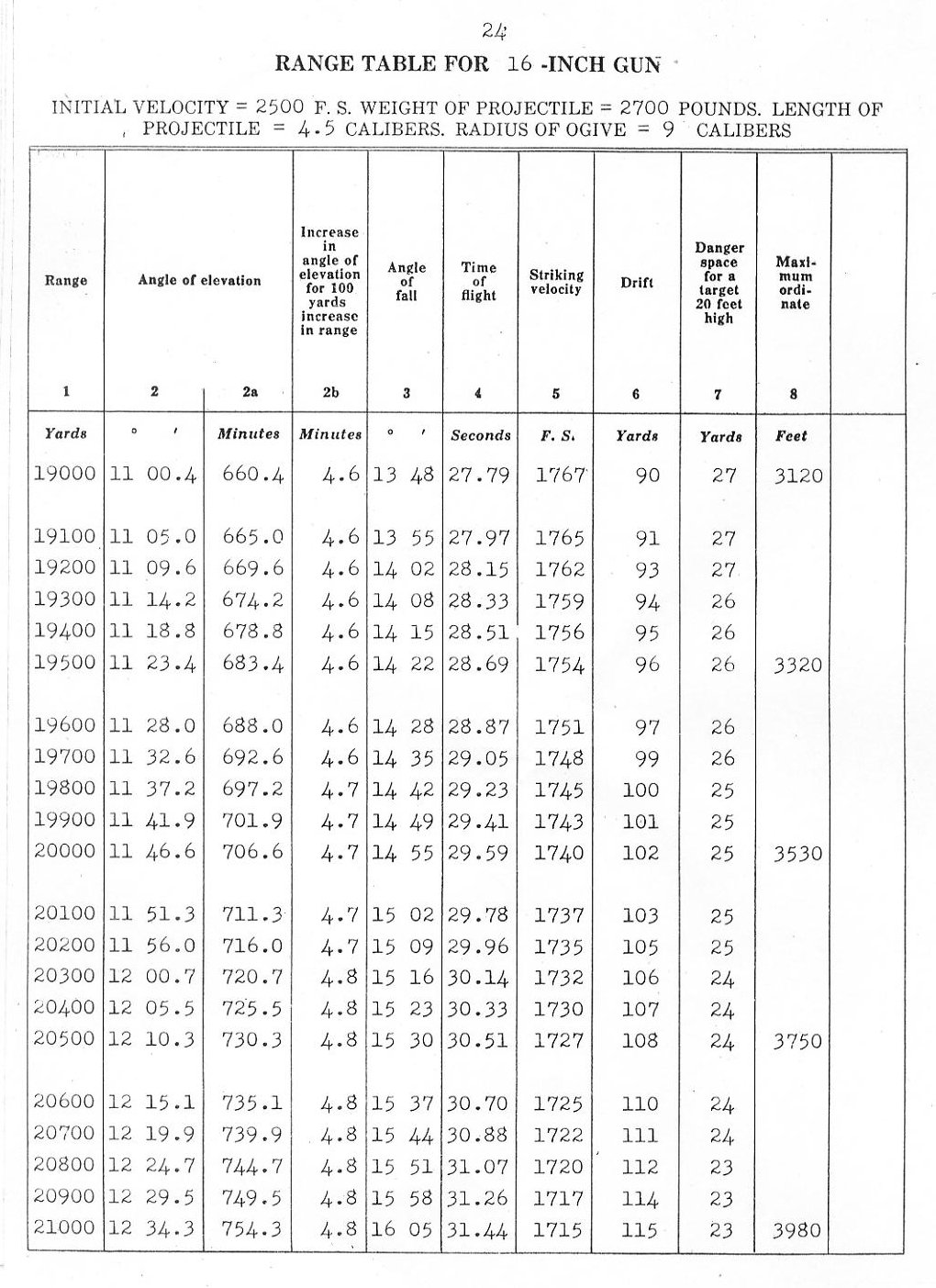
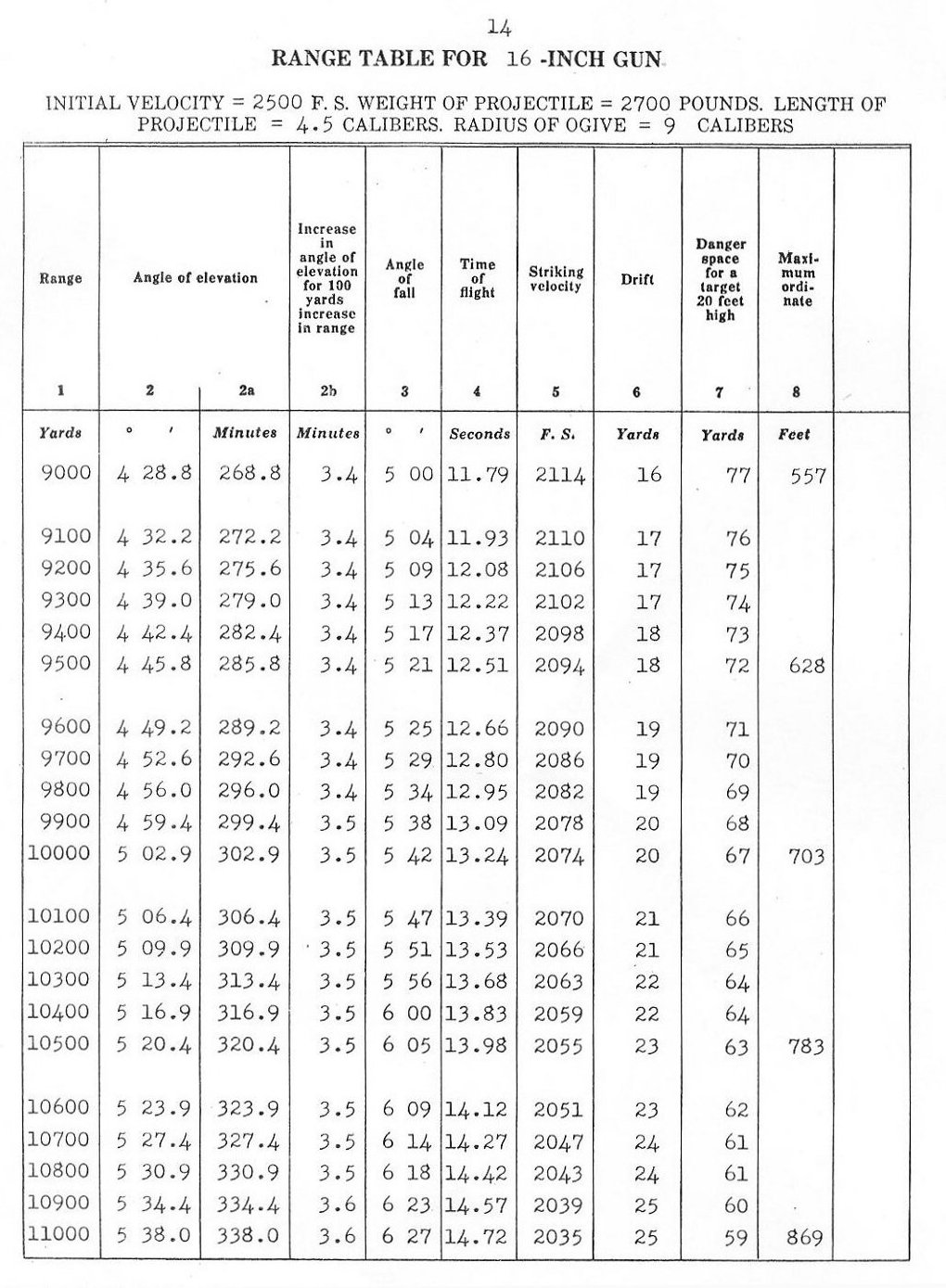
Regarding the second puzzle, the baseball, there is another thread here where I posted a copy of a US Navy declassified bulletin that describes the muzzle velocity and velocity at impact of 16" artillery shells for many various ranges (distances). With a muzzle velocity of 2500 fps, the Striking velocity for range of 19,800 yards is 1745 fps., a loss of 30%. However, the "Striking velocity" (column 5) for half that range (9,900 yards) is 2078 fps., a loss of only 17% (more than half the loss of the longer range). This is the case with all the Striking velocities in the charts. The velocity loss is always greatest from the start, and gradually decreases with range. Elsewhere the bulletin confirms that the projectiles are continually affected in flight by air resistance, which accounts for this slowing effect. They even provide adjustment factors for cross wind, tail wind, head wind, and any combination thereof. 
.
Consequently, the baseball puzzle can't be any different, in that the ball faces air resistance when the ball is moving, and that resistance causes the ball's kinetic energy to be dissipated in some degree, both on the way up (loss is more rapid when the ball is moving faster), and on the way back down (less loss due to air resistance coming down), similar to the trajectory of these 16-inch shells, and approximately like the difference between a range of 19,800 and 9,900 as if the latter were halfway up for the baseball, and the former applies to the baseball's entire flight up and back down again.
.