Send CathInfo's owner Matthew a gift from his Amazon wish list:
https://www.amazon.com/hz/wishlist/ls/25M2B8RERL1UO

Author Topic: Perpetual Subsistence Farming and Gardening  (Read 3600 times)

0 Members and 1 Guest are viewing this topic.

Re: Perpetual Subsistence Farming and Gardening
« Reply #10 on: January 07, 2022, 12:16:18 PM »
11 Best Sheep Breeds for Meat Production
March 14, 2019 by Kim Irvine
Table of Contents [show]

Suffolk

suffolk-sheep
The Suffolk sheep breed have been around for a while now and they are a large, sturdy breed with a long body, black faces and legs.
They are quiet docile breed that can be used as a dual-purpose sheep breed for both their meat and wool.
They have an excellent meat quality with lambs maturing early and market ready by 9 to 12 weeks. The lambs average weights at 42 days old is around 15 kgs and about 53 kgs at 100 days old. The meat has a superb flavor with one of the highest proportion of lean meat to fat. Making the meat lean and it has a fine grain and good color. Read More…
Texel
texel-sheep
The Texel is a strong hardy sheep with a sturdy robust build. They are heavily muscled, and the lambs grow relatively fast. They are today quite a popular meat sheep breed in a lot of countries throughout the world including America, Australia, New Zealand and countries in Europe.
The Texel is very popular for its high-quality meat it produces. They have a high dress out percentage with excellent meat to bone ratio. The have lest waste with a succulent well textured meat that has a unique full flavor of its own. The meat is in demand by butchers and consumers alike as the meat is lean and does not leave a fatty taste in the mouth. It also tends to take less time to cook the meat. Lambs can weigh up to 44 kgs at 24 weeks old. Read More…
Dorper
dorper-sheep
The Dorper Sheep is a hardy resilient South African breed of sheep that can withstand various harsh climates, environments and intensive operations.
They are used for both lamb and mutton. Their lambs have a high growth rate and reach weights of up to 36 kgs in 3 to 4 months. They have a premium quality of meat with a good meat to bone ratio and low percentage of waste. Read More…
Southdown
southdown-sheep
The Southdown sheep is a sheep that originates from the United Kingdom and it is medium sized sheep breed that has a long compact body in relation to the length of their medium length legs.
They are one of the oldest breeds of “down” sheep from the United Kingdom and are prized for their meat but also produce a decent quality and quantity of wool.
The sheep dress out well and produce a high quality with an excellent carcass. Their meat is flavorsome, rich in color, succulent and tender. Read More….
Border Leicester
border-leicester-sheep
The Border Leicester Sheep is a breed that originated in Britain a couple of centuries ago. They are a robust, hardy breed with a very distinctive face and ears that stand up long on straight from their head.
They have a body full of good wool, good meat to bone ratio and a docile, even-tempered nature that make them really easy to handle. They love to graze and forage which also makes them easy to maintain.
They are sought after for their fast maturing lambs and premium quality, succulently flavorful meat production. The lambs can reach up to 49 kgs by 4.5 months of age making them excellent for the production of premium quality lamb. Read More…
Corriedale
corriedale-sheep
The Corriedale Sheep breed is one of the oldest of the crossbred sheep breeds and originated from New Zealand. It is one of the most popular sheep breeds in quite a few countries around the world including America.
It is a hardy, adaptive, good lamber, the ewes are great mothers and they have a premium grade meat and top-quality wool.
The Corriedale Sheep breed is a meat producing sheep bred specifically developed and selectively bred to produce a high-quality meat. The lambs are fast growers with high quality, large carcasses and reach their ideal slaughter weight at around 10 months.
Barbados Black Belly
barbados-black-belly-sheep
The Barbados Black Belly sheep breed is a gentle docile breed that is active and alert. They are one of the best foragers and love to do foliage management. They produce a high-quality mild-flavored meat that is said to be very tender. Read More…
Shetland
shetland-sheep
The Shetland Sheep originate from the Shetland Islands in Scotland. They are very hardy small breed of sheep that have developed the ability to survive harsh conditions. They are highly adaptive, prolific and offer soft succulent meat and a myriad of colorful fine quality wool.
The Shetland sheep breed are historically known for producing delicious mutton of a high quality and outstanding flavor. They meat has a fine texture and far leaner than other breeds as the sheep tends to not store their fat solely around their muscle but rather more around their organs. The lamb of a Shetland just under one year of age is around 12 to 17 kg and has a delicate flavor that can be used for fast preparation as it does not need to have much added flavors or spices. The Hogget, which are aged at around 1 to 2 years of age get weights of between 16 to 20 kgs and the Hogget tends to be able to be cooked as you would the lamb only it tends to be a lot more flavorsome. Read More…
Teeswater
teeswater-sheep
The Teeswater sheep breed is a hardy sheep breed that can withstand most climatic and environmental conditions. They have a long life and the ewes can produce lambs for up to 10 to 12 years of age.
The Teeswater has a lean meat with a good meat to bone ratio and light bone. Purebred lambs can reach a weight of 19.9 kgs at 8 weeks old. The lambs can also reach a weight of up to 30 kgs without excess fat. Read More…
North Country Cheviot
north-country-cheviot-sheep
The North Country Cheviot sheep is a Cheviot breed of sheep that originated from Scotland in around 1791. They are a very striking looking sheep that are hardy and very alert. They are known for the clean smooth haired white faces and legs. They are bred in Scotland but are found in most parts of the United Kingdom as well as Ireland.
The Cheviot sheep breed is generally the lamb or sheep meat choice of most mothers. The meat has more meat and less fat ratio thereby giving less weight percentage. The lambs mature fast and tend to have a plump meaty carcass with delicately trimmed flesh with a great flavor and just enough fat on the meat to keep it succulent. The lambs yield a carcass weight of around 20 kgs between the age of 90 to 120 days old. Read More…
Wiltshire Horn
wiltshire-horn-sheep
It is a large breed of sheep that originates from Wiltshire in the South of England and is mainly bred for its outstanding meat quality. They are known for the high-quality meat production. Lambs can grow to their required weight without putting on any excess fat and therefor eliminating wastage. They produce a full-flavored succulent meat. Read More…


Re: Perpetual Subsistence Farming and Gardening
« Reply #11 on: January 07, 2022, 12:17:29 PM »
Orpington Chickens

SICS  URBAN FARMS
Orpington (Buff Orpington)
By 
LAUREN ARCURI
 
Updated on 12/09/20

  •  Pin
  •  Share
  •  Email
Buff Orpington

 
The Spruce / Steven Merkel
The Orpington is a dual-purpose chicken breed, raised for both eggs and meat. Developed in Orpington, Kent, England, it was bred specifically to produce superior eggs while still maintaining good meat quality. Several different color variations exist, including the common buff Orpington, and there are both full-sized and bantam varieties available.
Uses 
The Orpington chicken is a good all-purpose utility chicken, providing both eggs and meat, but it is frequently bred for show. Breeding for show is so common that the egg production of this chicken has fallen slightly over the years as breeders emphasize appearance overproduction. The Orpington is a friendly breed that also makes a good outdoor pet for families, schools, or clubs.
FEATURED VIDEO


Origins and History 
The Orpington was first bred by William Cook in 1866 by crossing Minorca, Lanshan, and Plymouth Rock breeds to produce a hybrid. Initially, Cook bred a blackbird aimed at hiding the grim of air polluted by London factories, but other colors soon proliferated. Today, the buff color is the most common.
The bantam version of the Orpington was developed in Germany in the early 20th century.
Size 
Mature Orpingtons are large, heavy birds, weighing in at 7 to 8 pounds. Bantams range from 3 to 3 1/2 pounds.
Temperament 
Orpingtons are big, gentle birds that respond well to attention. They are non-aggressive and enjoy handling, making them a good bird for families. Because they are passive birds, they do not do well in mixed flocks that include aggressive breeds, such as the Rhode Island Reds. Orpingtons are relatively quiet birds that do well in city or suburban environments. They are great with kids, making them a good choice for 4-H projects or schools.
Orpingtons do not mind confinement and respond well to the transportation and handling that goes with competitive showing.
Hens brood easily and make good mothers. A small flock of Orpingtons can easily be maintained over a long period. Roosters of the species are unusually gentle.
Colors and Markings 
The Orpington has a heavy, broad body with a low stance. The broad, smooth feathers are fluffy, and the back is short and curvy. There are several common color varieties, including buff, black, blue, and white. Buff is the most common color variation; other colors may be hard to find.
The beak, feet, and legs are pinkish-white in color, and the eyes are reddish-brown. The wattle, comb, and earlobes are red. The comb generally has five points.
side profile of a Buff Orpington

 
The Spruce / Steven Merkel
Buff Orpington side profile

Raising the Orpington 
Orpingtons are a heritage breed—one that existed before modern industrial meat and egg production. Many small farmers find heritage breeds to be hardier and healthier than their industrial, hybrid counterparts, and they tend to exhibit more classic chicken behaviors such as foraging, dust bathing, parenting their young, and sometimes going broody.
Orpingtons are also very cold-hardy and lay well through frigid winters and dark, short days. They are large birds with thick feathering that helps keep them warm and toasty through the winter months. They are good birds for cold climates but can also tolerate heat if they are given shade during the hottest part of the day.
Eggs and Meat 
An Orpington hen lays 200 to 280 large brown eggs per year. If raised for meat, the birds are ready for the table after about 22 weeks.
Common Health Issues 
Orpingtons thrive in the cold, but very warm temperatures can kill them unless they have shade and good ventilation. Orpingtons have dense feathers that can collect lice and mites—regular application of poultry dust can keep pests in check.
Large birds, Orpingtons can be prone to obesity unless they get ample exercise.
More Chicken Breeds 
If you find the Orpington chicken interesting, also consider these other chicken breeds:
Or consider any of the other chicken breeds commonly raised.

  • Plymouth rock, New Hampshire red and Ameracauna chickens walking in foliage

    Which Breed of Chicken Is Best for Your Farm or Backyard Flock?

  • Baby chickens inside coop with straw

    Want to Raise Your Own Chickens? What to Know About Broody Hens

  • Brown chickens inside coop under lifted walkway

    The Beginner's Guide to Choosing Chicken Breeds

  • chickens feeding

    What Should I Feed My Chickens?


Re: Perpetual Subsistence Farming and Gardening
« Reply #12 on: January 07, 2022, 12:17:42 PM »
Top 15 Sheep Breeds for Wool

Sherry grew up watching her uncle raise turtles, fish, goats, and chickens in his backyard. She brought home a goat last year.
15-sheep-breeds-for-wool

Humans first wore clothes 170,000 years ago but adornment with woven wool garments began only around 4000 BC. Although there are more than 200 breeds of sheep in the world today, not all produce wool ideally suitable for knitting. Some sheep breeds have been developed and selected for wool by breeders, spinners and fibre artists.
To choose an ideal breed for wool production, one has to look for raw wool characteristics that contribute to the quality and value of wool. These include fibre diameter, fibre curvature, staple strength, lack of pigmented fibre, staple length, spinning fineness and clean fleece yield. While the influence of these traits differs, they all contribute to an entire fleece’s attributes.
15 Best Sheep Breeds for Wool
These sheep breeds are known for producing the highest quality and quantity of wool and demanding the least maintenance.
1. Merino
The ancestors of pretty much all fine wool breeds produce the finest and most valuable type of wool. Merino sheep have wool of fineness 17-22 microns. Some of these may also be as thin as 12 microns which is nearly the size of cobwebs. The wool is very soft and has excellent felting properties.
When a yarn label says Merino, the fibre could be from one of several strains of Merino sheep. The most popular of those include Peppin, Boroola, Saxon and Delaine. Among them, the Saxon produces the finest and most highly-priced wool fibre.
The clean fleece yield can be low compared to other breeds because of the high amount of grease content.

  • Wool type: Fine wool
  • Traits: Fineness, softness, felting properties
  • Suitable for: Babywear, next-to-skin fabrics
Merino of New Zealand

Merino of New Zealand

© Flickr CC BY-SA 2.0

2. Debouillet
Debouillet is a result of a cross between Delaine-Merinos and Rambouillets. They are hardy and well adapted to varied conditions in the western US. The fleece is extremely soft, fine and has well-defined crimp and drape. Staple length is slightly better than the Merino and Rambouillets.

  • Wool type: Fine wool
  • Traits: Softness, elasticity, felting property
  • Suitable for: Babywear, next-to-skin fabrics, felt
Debouillet sheep

Debouillet sheep

Courtesy of Marathon Basin Wool Mill in Texas

3. Rambouillet
Rambouillet is a large-bodied fine wool sheep breed that is raised for meat as well. The fleece has a fineness of 19-23 microns. Crimp is finer and more even than that of a Merino’s. The crimp gives excellent loft and elasticity to the fibre. Overall it is one of the best wool sheep for felting.

  • Wool type: Fine wool
  • Traits: Softness, elasticity, felting property
  • Suitable for: Babywear, next-to-skin wear, blend with exotic fibres
Rambouillet sheep

Rambouillet sheep

With Permission via Mlberry Fiber Studio

4. Cormo
The Cormo originated from Tasmania, Australia. It is a fertile breed that can stand wet and cold conditions better than Merino. The fleece is clean, white and resultant heavy fleece weight.
The fibre diameter is quite uniform from head to tail. It is extremely soft, warm; has average lustre for fine wool and a perfect balance of loft and elasticity. The downside to wool from Cormo is the short length of staple and high crimp that makes it troublesome for the spinners to maintain even tension. However, despite this, you will see that the finished fabric from Cormo is flawless.

  • Wool type: Fine wool
  • Traits: Softness, elasticity, excellent felting property
  • Suitable for: Fashion fabrics
Cormo sheep

Cormo sheep

Courtesy of Apple Rose Farm

5. Comeback
“Comeback” refers to breeding back towards the Merino. The name is to describe any fleece that is at least 70 percent Merino. Comeback is a type of Australian sheep rather than a separate breed. These sheep were developed by crossing Merino with British longwool. Comeback produces fine, soft, heavy fleece with an outstanding felting quality.

  • Wool type: Fine wool
  • Traits: Softness, loft, felting property
  • Suitable for: Woolen and worsted fabrics, hand knitting yarns, felts
6. Bond
The outstanding quality wool of Bond is a result of the mix of traits of its ancestors, Merino and Lincoln. Bond grows soft and heavy fleece of diameter 23-28 microns. The staples are typically the longest among the fine wools.

  • Wool type: Fine wool
  • Trait: Staple length, lustre
  • Suitable for: Blankets, knitting wools
Australian Bond sheep

Australian Bond sheep

7. Polwarth
Polwarth, a type of Comeback is a dual-purpose breed valued for fibre and meat. It is a descendant of Lincoln and Merino that were bred to produce a dual-purpose breed with an emphasis on wool production. It is an ideal wool breed for damp climates where Merinos do not do so well.
The fibre is white, soft and has average fineness with low lustre. The staple length is reasonably good in all individuals of Polwarth. Like Polwarth, there is another comeback called Zenith whose fibre is nearly as nice as Polwarth but with little less lustre.

  • Wool type: Fine wool
  • Traits: Softness, elasticity, felting property
  • Suitable for: Babywear, worsted fabric, knitting yarns
Polwarth

Polwarth

Courtesy of Rewa Rewa Station

8. Targhee
The large dual-purpose breed produces dense fibre of uniform fineness ranging between 21-25 microns. The Targhee is a commercial breed for meat production and high-quality wool. The staples have a low lustre and a pretty decent length.

  • Wool type: Fine wool
  • Traits: Softness, elasticity, felting property
  • Suitable for: Next-to-skin fabrics (woven and knitted)
Targhee sheep

Targhee sheep

By Yathin sk - Own work, CC BY-SA 3.0

9. Teeswater
Teeswater is an excellent commercial wool breed considering its staple length, staple strength and lustre. It is widely used for both meat and wool production. Usually, hand knitters add a bit of Teeswater to another yarn for strength and sheen. Fibre from younger individuals is softer and silkier and fibre from older ones is more rough and tough.

  • Wool type: Longwool
  • Traits: Luster, staple length
  • Suitable for: Outerwear, rugs
Teeswater sheep

Teeswater sheep

10. Finnish Landrace
Finnish Landrace also popularly known as Finn or Finnsheep grows fibre of just perfect length and high, fine crimp. It is a fertile and hardy breed that adapts to harsh climate conditions. The fibre is of medium fineness (24-31 microns). Compared to other medium wool sheep, Finn produces fibre with softness and loft. Because of a low amount of lanolin, the fleece grows relatively clean on the animal.

  • Wool type: Mediumwool
  • Traits: Softness, elasticity, lustre, felting property
  • Suitable for: Outerwear, blankets, for blending
Finnsheep with Finn-Texel quintuplets

Finnsheep with Finn-Texel quintuplets

11. Wensleydale
Wensleydale is a large-sized, polled longwool sheep with distinctive blue-grey faces. The wool is one of the finest and lustrous of all longwools. The staple length is also quite excellent making it one of the most profitable wool breed out there.

  • Wool type: Longwool
  • Traits: Luster, staple length
  • Suitable for: Outerwear, rugs, mixed with cloth and upholstery fabric, for blending
Wensleydale sheep

Wensleydale sheep

© Flickr CC BY 2.0

12. Romney
Romney is a hardy dual-purpose breed used for meat and fibre. The breed is so popular that it is found in nearly all the countries growing sheep.
The fibre is uniform, semi-lustrous and has more crimp than most longwool sheep. It has a diameter of 32-39 microns and is of rough grade, unsuitable for garments directly in contact with skin. The yarn has a certain quality which gives it an earthy look and feel.

  • Wool type: Longwool
  • Traits: Elasticity, lustre
  • Suitable for: Outerwear, baskets, rugs, carpets
15-best-sheep-breeds-for-meat

Flickr © Linda N. CC BY 2.0

13. Borderdale
The Borderdale is a product of a cross between Border Leicester and Corriedale. It is a medium to large-sized, dual-purpose breed used for fibre and meat.
The fleece of a Borderdale is heavy, soft and relatively lustrous for a longwool. The diameter of the fibre is around 30-35 microns.

  • Wool type: Longwool
  • Traits: Felting quality, softness, lustre
  • Suitable for: Heavyweight apparel
Borderdale

Borderdale

14. Bluefaced Leicester
The sheep that are not blue-faced at all produce fibre of fineness 24-28 microns. The Leicester fibre has just the right amount of length, crimp with small curls and a silky yet lustrous feel with delicate drape. Moreover, fibre can be dyed effortlessly.

  • Wool type: Longwool
  • Traits: Softness, lustre
  • Suitable for: Strong fabrics, next-to-skin wear, outerwear
15-sheep-breeds-for-wool

By Magic Foundry - Ewes and Lambs in the Garden, CC BY 2.0

15. Corriedale
The Corriedale is dual-purpose meat and wool sheep that has come from crossing Longwool rams with Merino ewes. It is a hardy sheep adapted to a wide range of conditions. The fleece is soft, lustrous and nicely crimped.

  • Wool type: Fine wool
  • Traits: Luster, felting property
  • Suitable for: Worsted fabric, legwear, blankets
Corriedale sheep

Corriedale sheep

© Flickr CC BY-SA 2.0

This content is accurate and true to the best of the author’s knowledge and is not meant to substitute for formal and individualized advice from a qualified professional.
© 2021 Sherry Haynes
Comments
Chitrangada Sharan from New Delhi, India on January 13, 2021:
Excellent and informative article!
I had no idea about the different sheep breeds. You have done good research and I learnt a lot from your well written and illustrated article.
Thank you for sharing!
Linda Crampton from British Columbia, Canada on January 12, 2021:
This is a very informative article. Thank you for sharing so many details about wool, Sherry. I’ve never heard of most of the sheep breeds that you’ve mentioned. I’m glad I’ve learned about them.


Re: Perpetual Subsistence Farming and Gardening
« Reply #13 on: January 07, 2022, 12:18:57 PM »
Best Chicken Breeds for Eggs, Meat and Dual Purpose Varieties with Photos

An information guide to good egg laying chicken breeds available with images for your homestead and backyard. See which of the best laying hens and chickens are right for you.
3 MAIN TYPES OF CHICKENS: Hybrids, Pure-Breeds and Bantams
There are so many types of laying chickens out there that it is understandably overwhelming when you first set out to get some backyard chickens as egg layers. However, they can be broken down into 3 simple types:
1) Hybrid Chickens - The majority of commercial birds are of hybrid stock. These being a cross between a number of different chicken breeds. They are hardy and less susceptible to diseases and some of the best egg laying chicken breeds can be found in this type of fowl.
2) Pure Breeds - Many of these are of old heritage chicken breeds are bred down through generations. Heritage chicken breeds are ideal if you are going to exhibit your birds. They are also ideal if you want to ensure the future of pure bred birds that have been bred for certain qualities that you will enjoy, whether it be for egg-laying or for meat production.
3) There is another type of chicken - Bantam Chickens which are in a class on their own, and ideal to keep when you don't have a lot of space as they are much smaller than the ones mentioned above. However, besides true bantams, there are also many large breeds of chickens which have been bred to become bantam chickens in size.
Of these hybrid and pure bred chickens,  there are those that are good as egg layers, those that are good table birds for meat production, those that are just pretty to look at,  and those that are dual-purpose; good for both eggs and meat.
3 Classes of Chicken Breeds
What makes up hybrids, pure breeds and bantams are 3 main classes of chickens:
  • American Class of Chickens
  • Asiatic Class of Chickens
  • Mediterranean Class of Chickens
American Class
The main American chicken breeds are:

Rhode Island Reds are excellent egg-layers and Plymouth Rocks lay large, brown eggs.

However, besides these, there are also the Javas and the American Dominiques. Both these breeds are very old and are America's oldest breeds of chickens.

The Java chickens are similar to the Plymouth Rocks in size, shape and traits. The American Dominiques are the oldest American breed and it was from this breed that the Plymouth Rock originated.
Asiatic Class
The main Asiatic breeds are large, solid birds, quiet birds that make very good chickens for pets because of their docile natures. However, primarily the Asiatic birds, because of their large size are reared as meat chickens:
  • Brahmas
  • Cochins
  • Langshams
Brahmas are the largest of the breeds, docile birds that don't wander off, and their weight means that they don't fly too far. Brahmas are excellent broilers and also lay a large number of large, brown eggs.

Cochins have been bred for their size and there are several varieties such as the Buff Cochin, Partridge Cochin, Black Cochin and White Cochin. They are not great egg layers.

Langshams
, both black and white were introduced into America, and again are large, docile birds bred for their meat.

Mediterranean Class
The Leghorns are the best breed from the Mediterranean class for eggs, and in fact, the best layers around at the moment. Other than the Leghorns there are other types:

  • Black and White Minorcas
  • Andalusians
  • Anconas
  • Whitefaced Black Spanish
Chicken Breeds for Meat
If you are only interested in breeds of chicken for eating then you should be looking at:
  • Brahmas
  • Jersey Giants
  • Langshams
  • Cochins
However, this list is not limited to these meat breeds as you will see below. But these are just some of the more popular chicken breeds for meat.
Here is a list of both hybrid meat chickens and old breed and crossed meat chickens
Modern Hybrid Meat Chickens
* White Feathered Cobb
* Shaver Starbro
* Marshall
* Arbor Acre broiler
* Red Feathered Shaver Redbro
* ISA 657 Red-feathered broiler

Old Breeds and Crosses
* Whited feathered White Sussex
* White Cornish
* Red feathered Dorking
* Indian Game
* Rhode Island Red x Light Sussex
* Light Sussex x Indian Game (or vice versa)
* Plymouth Rock
Chicken Breeds for Eggs
If you are only interested in keeping chickens for eggs, then you should be looking at the following chicken breeds:
  • Leghorns
  • Spanish
  • Minorcas
  • Anconas
  • Andulusians
Chicken Breeds for Meat and Eggs
Finally, if you want to keep chickens for both meat and eggs then you should be looking at keeping:

  • Rhode Island Reds
  • Plymouth Rocks
  • Orpingtons
  • Wyandottes
My Opinion on the Best Chicken Breeds for Eggs
As far as I am concerned, the best chicken laying breeds are by far the White Leghorns , the Plymouth Rocks, and the Rhode Island Reds.
In the past I have kept Rhode Island Reds crossed with Light Sussex and they are excellent layers too  producing eggs 6 days out of 7 during the laying season.
They did go off the boil for a while when a lot of them were broody, but eventually they sorted themselves out and went back to laying eggs once again. However, this is one disadvantage of Rhode Island Reds crossed with Light Sussex - they do tend to go broody more than other laying hens.
If you want to your hens to raise their own chicks, then this chicken breed would be the perfect mother. However, if you are just keeping laying hens for eggs, then you may want to look at Leghorns crossed with Rhode Island Reds, or pure Leghorns.
If you are looking for good laying hens in general, trying to decide on the best chicken breed for you. There are plenty to choose from, as you will see from the list below, and although pure bred chickens, in the main, are pretty to look at, mixed-breeds are more hardy, and often very good layers for the backyard chicken keeper.
However, having said all that, not all chicken breeds lay at the same time throughout the year and it is better to keep two breeds that will give you a good supply all year round.
Many chicken keepers will keep Leghorns as their main flock, but then they will also keep American breeds of chicken as well. This is because American chicken breeds will often lay throughout the winter, while the Leghorns won't.  During the summer, the Leghorns are better layers than the American breeds.
Plymouth Rocks, although good layers, only out produce Leghorns in March. However, because they are hardy birds they lay well during winter. The Wyandottes produce more eggs during December, January, September, and October.
The Rhode Island Reds lay well in January through to April, but during November, May, June, July, and August, the Leghorns usually outlay all their competitors.
Finally, on a personal level, I thought I would mention ISA Browns. They are not a chicken breed, but rather a hybrid chicken. They are excellent chicken layers of brown eggs that are often the choice of chicken used by egg farms.
I have just acquired 2 of late, and are impressed with their performance. They are said to lay 300 eggs a year. The only downside is, that because the ISA Brown is such an egg-laying machine, they have a very short lifespan. However, I am hoping to beat this by keeping up their protein levels. We shall see. I also keep Plymouth Barred Rocks as they are an excellent dual purpose bird that do well in cold weather. And we also have Columbian Rocks.
Basically, if you want to keep chickens for eggs, you really have to keep a number of different chicken breeds that will produce eggs for you over the year, because you will find that when one type is not laying as well, the other varieties are.
So you can see that keeping a number of different chicken breeds for eggs would make far more sense, than just having one type of chicken.
However, I do have to add, that if you don't get your hens to lay by September or October after they have moulted, they probably won't lay again until the following spring.
As a result you will find that some breeders force their hens into moulting by reducing the grain drastically from mid-July through to mid-August, giving the hens only enough grain to keep them alive. After that, they are then given lots of grain and lots of sunflower seeds.
This seems to result in a total loss of feathers almost all at once. However, a month later, by mid-September the hens are through their moulting and laying again.
ISA Brown and Barred Rock Chickens
Here is one of my ISA Brown hens, along with my Plymouth Barred Rocks.
My personal pick for good laying hens is any of the following 4 chicken breeds that are cross-bred with each other:
  • White Leghorns
  • Rhode Island Reds
  • Light Sussex
  • White Wyandottes
Rhode Island Reds, crossed with White Wyandottes makes another excellent cross-breed for chickens.
Cross-Breeding Chickens for Eggs and Sex-Linking
If you are going to go into cross-breeding chickens, you need to know what the off-spring will look like.
If you mate a Rhode Island cockerel with a Light Sussex hen the male chicks will be white in color, like the hen, and the female chicks will be reddish brown, like the father. This is called "sex-linking" in chickens and makes identifying the sexes easier.
If you mate a Rhode Island cockerel with a White Wyandotte hen, you will again get the same result where the female chicks are reddish brown, and the male chicks are white. The offspring of this mix, makes better layers than those crossed with a Light Sussex.
You will not be able to sex-link chicks if you have a light colored cock, such as a White Leghorn and mate it with a Rhode Island hen, for example.
However, sex-linking can be done with mixed-bred chicks in a following generation, if you mated a Rhode Island Red cockerel with a hybrid that was the result of a mating of a Rhode Island Red cockerel with a White Leghorn, for example.
Chicken Breeds that Lay Brown Eggs
Despite the fact that there is no nutritional difference in both brown and white eggs, many people want chickens that lay brown eggs.
There are many hybrid breeds as well as pure breeds or first crosses that lay brown eggs, and I thought I would list them here for you, as on overview.
Hybrid Layers of Brown Eggs
* ISA Brown
* Hisex Brown
* Shaver Brown
* Hy-Line Brown
* Babcock Brown
* Ross Brown
* Hubbard Golden Comet
Pure Breed Chicken Layers of Brown Eggs
* Maran
* Rhode Island Red
* Barred Plymouth Rock
* Black Rock
* Rhode Island Red x Light Sussex
* Dorset
* Wellsummer
GOOD EGG LAYING CHICKEN BREEDS: BEST EGG LAYERS
                                          6 eggs to denote quantity of egg laying


LEGHORN CHICKEN BREEDS

These are probably the best laying chickens around, besides the Rhode Island Breeds.

They are prolific egg layers of white eggs. A small, spritely, noisy bird with great style, that like to move about. Leghorns are good foragers and can often glean much of their diet from ranging over fields and barnyards. Leghorns are capable of considerable flight and often roost in trees if given the opportunity. Leghorns lay more than 300 eggs a year.
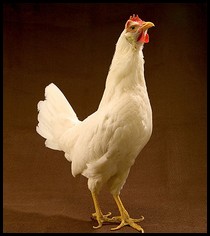
leghorn chicken breed
Very flighty
Good foragers
 Rarely Broody


AUSTRALORP CHICKEN BREEDS

An Australian bird developed from the Orpington chicken. Black feathers with a green sheen. Can lay from as early as 5 months. Australorps lays about 300 eggs a year, so another good layer for chicken eggs.


Australorp Chicken
Dual Purpose
Hardy
Good Choice for Novice Breeder


ORPINGTON CHICKEN BREEDS


Originally from England. This is a heavy set bird and because of its size is not flighty. Orpingtons are lovely, docile birds and therefore make excellent chickens as pets as well as a breed for the novice chicken keeper. Orpingtons lay 220 - 240 eggs a year, making it another good breed for egg layers.
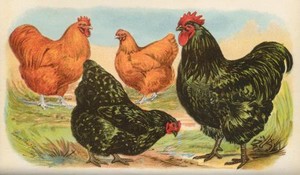
orpington chickens
Broody
Gentle
Ideal for the novice


LIGHT SUSSEX CHICKEN BREEDS

The Sussex is an attractive little bird and makes a good all-round farm fowl. It is a good layer of cream eggs. 260-280 eggs per year. So not a bad egg layer.

light sussex chicken breeds
Best Dual Purpose Bird
Good Foragers
Tend to go Broody


RHODE ISLAND RED CHICKEN BREEDS

The Rhode Island Red Chickens are prolific egg layers of medium brown eggs. Relatively hardy, they are probably the best egg layers of the dual purpose breeds. Reds handle marginal diets and poor housing conditions better than other breeds and still continue to produce eggs. 200-250 eggs a year.

Rhode Island Red
Dual Purpose Bird
Hardy
Good Choice for Novice Breeder


                                      4 eggs to denote quantity of egg laying

ANCONA CHICKEN BREEDS


Italian breed of chicken, originating from the town Ancona. Black with white-tipped feathers. Laying chickens of large white eggs; 220 - 240 a year.
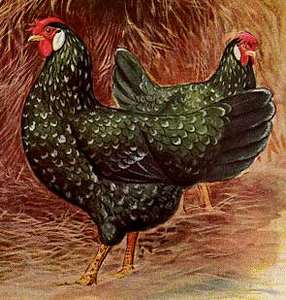
ancona chicken breed

Very flighty
Broody
Gentle


HAMBURG CHICKEN BREEDS

Originally from Holland, despite its name. Active and flighty chickens that are considered good laying hens, laying 200 - 220 small white eggs every year. Several varieties including Silver Spangled Hamburgs, Golden Spangled Hamburgs, Gold- Pencilled and Silver-Pencilled.

silver-pencilled-hamburg-chickens
Active
Very flighty and need wings clipped

HOUDAN CHICKEN BREEDS

A striking bird, originally from France. It has a crest, beard and muffs and has 5 toes. 200-220 eggs per year, so making these average laying hens.
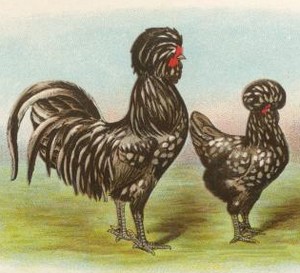

Houdan Chickens
Exhibition Bird 


MINORCA CHICKEN BREEDS

Originally from Spain. This ancient chicken, known to the Romans lays about 220-240 large white eggs every year during productivity. So good laying hens that are hardy and good foragers for their food. The most common color is black, but you get white, buff and blue Minorca chickens too. Large combs and wattles. Developed for the production of very large chalk-white eggs, the Minorca is today principally an exhibition fowl.
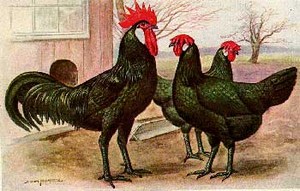

Black Minorca Chickens

Good Foragers
Alert
Rarely go Broody


ARAUCUNA CHICKEN BREEDS
The Araucuna is a South American bird that is rumpless and a  producer  of medium-sized blue/green eggs. Lays 180-200 eggs a year. So good laying chickens and a good layer for those unusually colored eggs. It is the only chicken breed to lay colored eggs of red, blue or green.
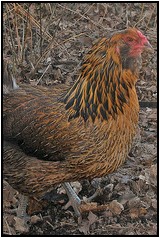
Araucana Chicken
Dual Purpose
Hardy
Good Choice for Novice Breeder


BARNVELDER CHICKEN BREEDS

A quiet and often lazy little bird that lays 180-200 light brown eggs a year. Originally from the town of Barnvelder in Holland, it is the most popular dual purpose chicken in this country. Good chicken for damp and cold, windy climates.
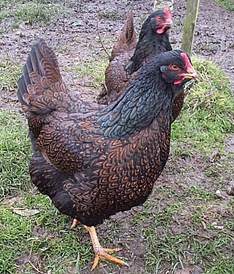

Barnvelder-chicken

Good Dual Purpose Bird
Docile
Hardy


INDIAN GAME FOWL

Also known as Cornish chickens. Originally from Cornwall. Not good  egg layers; 160-180 eggs a year. Kept for meat purposes as it has a well muscled body, but also needs substantial amounts of food.
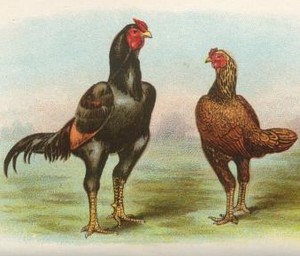

Indian Game Fowl

Broody
Meat Chicken

Prone to mite infestations


PENEDESENCA CHICKEN BREEDS

The Penedesenca, once close to extinction in the 80s but now only semi-rare. The Penedesenca has white ear lobes but lays deep red-brown eggs with a sheen to them. 160-180 eggs a year.
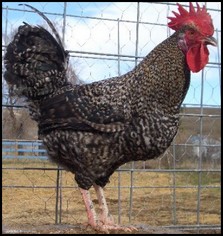


                      Penedesenca Cockerel


Gentle if hand-raised.
Black Penedesenca are Dual Purpose


PLYMOUTH ROCK

An American breed of chicken. Plymouth Rocks are a good general farm chicken. They are docile and easy to handle. They will normally will show broodiness and possess a long, broad back; a moderately deep, full breast and a single comb of moderate size. Because of their size they are not flighty. The best known type is a barred plymouth rock chicken breed, as shown below. The Plymouth rock chickens are average egg layers with 160-180 eggs a year.
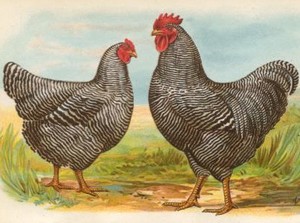

barred rock plymouth rock

Broody
Dual Purpose

Docile


WYANDOTTE CHICKEN BREEDS

An American breed of chicken. Wyandottes have a well-rounded body and their docile natures make them ideal backyard chickens. They lay 180-200 eggs a year, and are pretty birds to look at. There are a number of types such as black, white, silver laced, gold laced, buff, Columbian and silver-pencilled.
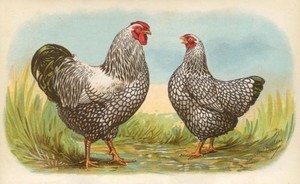

silver laced wyandottes
Docile
Good Choice for Novice Breeder

Pictures courtesy of http://www.ansi.okstate.edu


Offline Meg

Re: Perpetual Subsistence Farming and Gardening
« Reply #14 on: January 07, 2022, 12:29:11 PM »
This thread is a great idea!

One of the sheep breeds that I would recommend in addition to the ones already listed is the Soay sheep, from the Island of Soay in the Scottish Hebrides. There are just beginning to become more available in the U.S. They are hardy, smaller than typical sheep, and their wool is especially fine. The wool can be plucked in that the sheep naturally shed their coat. They can also be sheared. It's the type I would purchase, if possible.

Soay Sheep For Sale – Smoky Buttes Ranch

Soay sheep - Wikipedia

Soay lamb:

Soay sheep lamb - Soay sheep - Wikipedia

As an aside, the inhabitants of the Island of St. Kilda were evacuated about 1930. For centuries, they lived an isolated, communal and sustainable life, until the 18th and 19th century, when tourists began to flock to the island to view them. They were thought to be originally Catholic, but prot ministers were sent to them, which helped lead to their decline. They used the wool from Soay sheep to make most of their clothing.