Send CathInfo's owner Matthew a gift from his Amazon wish list:
https://www.amazon.com/hz/wishlist/ls/25M2B8RERL1UO

Author Topic: SSPX Priest Publicly Smashes Fr. Paul Robinson's (SSPX) Book  (Read 23129 times)

0 Members and 1 Guest are viewing this topic.

Re: SSPX Priest Publicly Smashes Fr. Paul Robinson's (SSPX) Book
« Reply #85 on: December 03, 2018, 10:36:49 AM »
Here is what Fr Roberts said you and others propose;
...

Here then Claudel is your opinion, rotten with accusations like above. Well the above is not the Catholicism I learned
My understanding is that you consider the 1616 decision infallible, and yet a decision in 1820/22 stated there were no obstacles for Catholics holding what you believe was infallibly defined as heresy. 

So don't you hold much the same as that list?

In particular, your geocentrist view appears to agree with #1, #3, #4, #7 and #8, and a central part of #2, that a decree confirmed by the Pope may "compromise the safety of a portion of the deposit committed to the Church's keeping."

Re: SSPX Priest Publicly Smashes Fr. Paul Robinson's (SSPX) Book
« Reply #86 on: December 03, 2018, 10:56:13 AM »
You have asserted this, but have not provided evidence.

If Sungenis were to respond here he might well say what he said in his very measured yet at the same time devastating critique of Fr. Robinson's book on pp. 230-231 of his own book, Scientific Heresies and Their Effect on the Church: "Some [such as Stan? :)] try to get around the history by claiming the popes never signed the decrees, even though they may have signed the Vatican's dissemination of the decision to the rest of Europe, and therefore the decree is not infallible.  But there are several problems with this attempted escape.

First, I am not aware of any stipulation in canonical law that a pope had to sign a decree.  Although a signature surely made clear the pope's intention and directive, his verbal confirmation was never said to be without the same authority, especially since the rules of papal infallibility were not yet formulated; and even when they were formulated in 1870 at Vatican I, it did not say that the pope's signature was required.

Second, even if the geocentric doctrine was not given on the level of infallibility  (and only the Church herself can determine whether it is, but has never done so), this does not make the doctrine an error, since many papal decrees were given on lower levels of canonical authority and, and according to Pius XII's decree and its confirmation at Vatican II in both Lumen Gentium and Humani Generis in 1950, we are to assent to them and hold them as doctrine.

Today, however, Catholics [including Stan?  :)] who desire to believe in heliocentrism wish the geocentric doctrines were a mistake so they can then claim they don't need to follow the doctrine, such as Fr. Robinson.  But they have no right to do so, even if they claim science proves the decrees against Galileo were a mistake, for only the Church can determine fit the science has reached the needed level of proof, and She has never done so."

OK, Stan go to it!


Re: SSPX Priest Publicly Smashes Fr. Paul Robinson's (SSPX) Book
« Reply #87 on: December 03, 2018, 01:24:36 PM »
You have asserted this, but have not provided evidence.

I am tired showing the evidence that the Church ruled the 1616 decree irreformable so for the last time here they are again. The first record of this was at Galileo's trial.

The Inquisition’s 1633 Sentence:
‘… “And to the end,” said the docuмent, “that so pernicious a doctrine might be altogether taken away, and spread no further to the heavy detriment of Catholic truth, a decree emanated from the Sacred Congregation of the Index in which books that treat of doctrine of the kind were prohibited, and that doctrine was declared false, and altogether contrary to the sacred and divine Scripture.” And observe in what emphatic and unmistakable terms Rome repudiated the notion that the decree might be interpreted as a practical direction, as a measure of caution for the time being, or as anything short of an absolute settlement of the question. “Understanding,” the Congregation said, “that, through the publication of a work at Florence entitled Dialogo, the false opinion of the motion of the Earth and the stability of the sun was gaining ground, it had examined the book, and had found it to be a manifest infringement of the injunction laid on you, since you in the same book have defended an opinion already condemned, and declared to your face to be so, in that you have tried in the said book, by various devices, to persuade yourself that you leave the matter undetermined, and the opinion expressed as probable; the which, however, is a most grave error, since an opinion can in no manner be probable which has been declared, and defined to be, contrary to the divine Scripture.”    
“Invoking, then, the most holy Name of our Lord Jesus Christ, and that of His most glorious Mother Mary ever Virgin, by this our definitive sentence we say, pronounce, judge, and declare, that you, the said Galileo, on account of these things proved against you by docuмentary evidence, and which have been confessed by you as aforesaid, have rendered yourself to this Holy Office vehemently suspected of heresy, that is, of having believed and held a doctrine which is false and contrary to the sacred and divine Scriptures -to wit, that the sun is in the centre of the world, and that it does not move from east to west, and that the Earth moves, and is not the centre of the universe; and that an opinion can be held and defended as probable after it has been declared and defined to be contrary to Holy Scripture.
---------------------------------------------------------------------------------------

In 1820, when Settele was looking for an imprimatur for his book, fr Anfossi refused to give it one based on the fact that the 1616 was not reformable. Here is what Fr Olivieri, head man in the Holy Office at the time, had to say as recorded from the Docuмents of 1820, recently released and reproduced in Maurice A Finocchiaro’s Retrying Galileo

Olivieri: ‘In his “motives” the Most Rev. Anfossi puts forth “the unrevisability of pontifical decrees.” But we have already proved that this is saved:

Olivieri then, Commissary General of the Inquisition, does not argue that the decrees against a fixed sun and moving Earth were not ‘irreversible pontifical decrees.’ No he does not. The opposite is the case in fact; given one of those decrees found heliocentrism formal heresy, he thereby confirms that the 1616 decree was without argument papal and ‘unrevisable.’ Now a papal decree that is unrevisable is an infallible decree.

Re: SSPX Priest Publicly Smashes Fr. Paul Robinson's (SSPX) Book
« Reply #88 on: December 03, 2018, 04:11:47 PM »
My understanding is that you consider the 1616 decision infallible, and yet a decision in 1820/22 stated there were no obstacles for Catholics holding what you believe was infallibly defined as heresy.

So don't you hold much the same as that list?

In particular, your geocentrist view appears to agree with #1, #3, #4, #7 and #8, and a central part of #2, that a decree confirmed by the Pope may "compromise the safety of a portion of the deposit committed to the Church's keeping."

Yes Stanley, well spotted, you are perfectly correct about the seeming contradictions in Fr Roberts eight points. But upon study we find the 1820-35 decrees spoke not of any doctrinal contradiction but merely concerned the publication and reading of non heretical heliocentric books, something allowed in 1616 so as not to stop the measurements of astronomy..    

In 1820 there were two papal decrees:
1820 Decree states: ‘The Assessor of the Holy Office has referred the request of Giuseppe Settele, Professor of Astronomy at La Sapienza University, regarding permission to publish his work Elements of Astronomy in which he espouses the common opinion of the astronomers of our time regarding the Earth’s daily and yearly motions, to His Holiness through Divine Providence, Pope Pius VII. Previously, His Holiness had referred this request to the Supreme Sacred Congregation and concurrently to the consideration of the Most Eminent and Reverend General Cardinal Inquisitor. His Holiness has decreed that no obstacles exist for those who sustain Copernicus’ affirmation regarding the Earth’s movement in the manner in which it is affirmed today, even by Catholic authors. He has, moreover, suggested the insertion of several notations into this work, aimed at demonstrating that the above mentioned affirmation, as it is has come to be understood, does not present any difficulties; difficulties that existed in times past, prior to the subsequent astronomical observations that have now occurred. [Pope Pius VII] has also recommended that the implementation [of these decisions] be given to the Cardinal Secretary of the Supreme Sacred Congregation and Master of the Sacred Apostolic Palace. He is now appointed the task of bringing to an end any concerns and criticisms regarding the printing of this book, and, at the same time, ensuring that in the future, regarding the publication of such works, permission is sought from the Cardinal Vicar whose signature will not be given without the authorization of the Superior of his Order.’

‘The most excellent [Holy Office] have decreed that there must be no denial, by the present or by future Masters of the Sacred Apostolic Palace, of permission to print and to publish works which treat of the mobility of the Earth and of the immobility of the sun, according to the common opinion of modern astronomers, as long as there are no other contrary indications, on the basis of the decrees of the Sacred Congregation of the Index of 1757 and of this Supreme [Holy Office] of 1820; and that those who would show themselves to be reluctant or would disobey, should be forced under punishments at the choice of [this] Sacred Congregation, with derogation of [their] claimed privileges, where necessary.’

Note the heliocentrism allowed in the first decree was one that ' espouses the common opinion of the astronomers of our time regarding the Earth’s daily and yearly motions and the second decree ' according to the common opinion of modern astronomers, as long as there are no other contrary indications, on the basis of the decrees of the Sacred Congregation of the Index of 1757 and of this Supreme [Holy Office] of 1820. Now to understand this you must know the circuмstances of the 1757 index concession and what Olivieri told the pope;

Olivieri: In his “motives” the Most Rev. Anfossi puts forth “the unrevisability of pontifical decrees.” But we have already proved that this is saved: the doctrine in question at that time was infected with a devastating motion, which is certainly contrary to the Sacred Scriptures, as it was declared.’
 

This advice to the pope about the irreformable 1616 decree was nonsense, invented by Olivieri as a way to have his irreversible decree and his 'now proven' heliocentrism. The two decrees above allowed such non-heretical books on astronomy to be published and read. Neither dared contradict or ignore the 1616 decree.


Re: SSPX Priest Publicly Smashes Fr. Paul Robinson's (SSPX) Book
« Reply #89 on: December 03, 2018, 08:29:18 PM »
Stan, can you help us untangle/unpack/understand the following endorsement by Professor Jakub Taylor of Fr. Robinson's book given on Fr. Robinson's website?  See https://therealistguide.com/endorsements.

The endorsement -- don't you wish you had such a clear talking professor in college  -- reads as follows:

Dr. Jakub Taylor
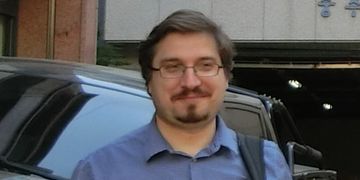

It is not an easy task to write a short endorsement of Fr. Robinson’s book, even if - in itself – the book is not a long opus. The difficulty lies in fear which I experience together with many commentators of the works of St. Thomas: it lies in a justified anxiety that the comment will become much less comprehensible in relation to the scrutinized original. But if, despite the lack of skill, I am to fulfill my task, I should follow a simple pattern of judgment and try to respond to two fundamental questions: does the author recognize the importance of a problem he is dealing with, and does he presents an adequate remedy. In my opinion, the answers to both of these questions appear to be positive. Let me try to explain why.

Chesterton used to mock modern men by saying that “like other barbarians, they really believe the mirror”; and therefore break it, hurting themselves and others in the process. Men have not changed from the time of Chesterton, it seems that human condition reached the bottom of the gnoseological abyss: most of us do believe that the reflections of the ‘mirrors’ represent the essence of being.

Fr. Robinson would agree with this assessment, as he considers the idealistic epistemology the source of most (if not all) contemporary problems, both within the parallel and vertical dimension of human reality. A remedy he proposes is simple: return to the realist cognition and focusing upon causa finita argumentation. Pointing out these two factors proves that author possesses a good intuition and perceptive abilities, features not shared by many. Why is focusing upon modus quo rather than modus quod so important? The way we approach reality is quintessential, as it determines our every-day praxis.
This fact is nicely put into words by a Polish contemporary poet, J.M. Rymkiewicz.  In 2011, he expressed his frustration about the ongoing events by assessing the problem of the destruction of human identity, a disregard towards tradition, and the accomplishments of the past, while at the same time exaggerated, beautified ‘non-reality’ was being imposed by ‘deceivers and villains’. “Nothing is true anymore” - he writes emotively – “we have fiduciary economy, irrelevant problems presented to us as relevant, fictitious state agencies administered by a fictitious government… Even unimportant details of this ‘non-reality’ are nothing but the shards of thoughts of the un-real authorities and un-real literati, who preach to us that this ‘non-reality’ is indeed the essence of what is”.

Polish poets are not philosophers or scholars when it comes to guarding their tongues, but from time to time they manage to name the problem more accurately than others.  Rymkiewicz called this phenomenon a “Great [Cognitive] Darkening”, which is a term semantically close to what Gordon Wood called an ‘Epistemological Revolution’.

Fr. Robinson, following the great tradition of Christian Aristotelianism and thoughts of the erudite English-speaking apologists, managed to describe the very same problem taking the philosophical deductive approach. Comparing to either Rymkiewicz or Wood he did it in much more coherent and compact fashion. Not many thinkers today are capable of such a feat, as most of them shiver in fear at being considered ‘judgmental’ or they pursue the feeling of safety within the ontological realm of ‘concepts’, doing anything to avoid suspicion of being called ‘axiom-obsessed supporters of foundationalism’. Fr. Robinson knows that talking about the absoluteness of truth is not very pleasant to a modern scholar, especially when it challenges the established lie (often sugar-coated by the term ‘paradigm’), but it is – de facto – a very scholarly thing to do. In my opinion, the author of the “Guide” deserves praise for this attempt, as well as for his attachment to the aleithia-oriented philosophical tradition. The fact that he was capable to interweave his very specific (I dare even say ‘sarcastic’) sense of humor within the precise philosophical narration is even more praiseworthy and should be highly regarded by the readers.

If I were to point out the feature of the book that I regarded most highly it would be the following: within the Anglo-Saxon worldview, any epistemological discourse will often end up facing the alleged dichotomy between the realm of religion and the realm of science. It is an obvious categorical shift problem intrinsically affiliated with the Euler diagram. I was very happy to find this issue addressed in the book. I had an impression, that Fr. Robinson, unlike many of his contemporaries, was quite successful in explaining this issue.

Even if Fr. Robinson’s critique of contemporary scholarship might appear to be too harsh, one might at least hope that it will lead scientists to avoid advocacy research, and build their theorems upon the realistic basis or, at least, to encroach the realm of philosophy or theology only after an adequate theoretical preparation. It might be nothing but an expression of my enormous naivete, but I dare to assume that if this guide is to be followed by other works of this kind, there is a chance of effective propagation of realistic thinking not only among the amateur philosophers, but even among us, professional concept-making academicians. A daring think to hope indeed! And I thank Fr. Robinson for giving me this hope by writing his extraordinary book.

Jakub Taylor is a research professor in the Academy of East Asian Studies at Sungkyunkwan University, in Seoul, South Korea. [Would it be uncharitable to hope that he remain there?]