Send CathInfo's owner Matthew a gift from his Amazon wish list:
https://www.amazon.com/hz/wishlist/ls/25M2B8RERL1UO

Author Topic: Über-Modernist Theologian Hans Küng Dead at 93  (Read 1509 times)

0 Members and 1 Guest are viewing this topic.

Über-Modernist Theologian Hans Küng Dead at 93
« on: April 06, 2021, 12:16:20 PM »
Hell’s Apostle Called to Judgment: Über-Modernist Theologian Hans Küng Dead at 93


novusordowatch.org/2021/04/hells-apostle-called-to-judgment-uber-modernist-theologian-hans-kung-dead-at-93
April 6, 2021April 6, 2021
“Give an account of thy stewardship…” (Lk 16:2)
Hell’s Apostle Called to Judgment:

Über-Modernist Theologian Hans Küng Dead at 93
Big news on Easter Tuesday: One of the world’s most dangerous, most notorious, and most prolific apostates has been called to judgment.
We are talking about the Swiss theologian Fr. Hans Küng. According to reports, the famous “church critic” died in his sleep on April 6, 2021, at his home in Tübingen, Germany.
Born on Mar. 19, 1928, Kung was ordained a priest for the diocese of Basel, Switzerland, on Oct. 10, 1954, clearly one of the most fateful mistakes in ecclesiastical history.
The Holy Office under Pope Pius XII took notice of Kung right away. Although his denial of the Faith later became manifest and tenacious, Kung always remained a priest in good standing with his diocese. He taught “theology” at the University of Tübingen since 1960.
Together with Fr. Joseph Ratzinger (“Pope Emeritus” Benedict XVI), Fr. Kung was one of those suit-and-tie-wearing “theological experts” at the Modernist Second Vatican Council (1962-65), called to his advisory role as a competent “Catholic theologian” by “Pope” John XXIII. By contrast, the then-orthodox Catholic University of America issued an interdict against Kung in 1963 for his lecture “The Church and Freedom”. Though Ratzinger and Kung went separate theological ways, with Ratzinger preferring a more moderate Modernism (which, being moderate and therefore not as easily identifiable, is actually more dangerous, as Fr. Felix Sarda shows in Liberalism is a Sin), whereas Kung decided to go full-steam ahead and reason Modernist principles to their logical conclusions.
Due to his performance at the council, Mgr. Joseph Fenton called Küng “king of the nuts” in his personal diary. But Fenton also spoke against Kung in public, such as in this article:

By the early 1970s, Kung had become a notorious denier of the dogma of papal infallibility as defined at the First Vatican Council in 1870. His 1971 book Infallible? An Inquiry generated untold controversy. After numerous quarrels with the Novus Ordo Vatican’s Congregation for the Destruction of the Faith, on December 15, 1979, the Congregation’s Prefect, “Cardinal” Francis Seper, declared several of Kung’s books to contain errors incompatible with Catholic — even Novus Ordo! — teaching and announced that Kung was no longer permitted to teach theology under the name of “Catholic” and could not be considered a Catholic theologian (see the Novus Ordo “Acta Apostolicae Sedis” 72 [1980], pp. 90-92).
Despite his clear heresies and the dangerous influence he held as an active university professor, the Vatican never excommunicated Kung, did not suspend him, and did not even remove his priestly faculties. The effect was that Kung continued teaching as before at the same university, though no longer as part of the “Catholic” faculty. He became professor of “ecuмenical” theology instead. The secular world has long hailed him as a courageous “rebel Catholic” and frequently consulted him on “controversial” Catholic questions as a “critical voice of reason” against (what they perceived to be) the militantly-hardline Vatican.
On September 26, 2005, a newly-elected “Pope” Benedict XVI (Ratzinger) met with Kung in the Vatican for a chit-chat, and a chit-chat is really all it was. Kung described the meeting as “very joyful” and with “no reproaches, no polemics” from Ratzinger (see John Allen’s coverage of the meeting here). This did not come as a surprise to those who knew the real Joseph Ratzinger — as opposed to the pseudo-traditionalist face put on him by his cheerleaders at The Remnant & Co. — because in his 1996 book , Ratzinger had already said about Kung: “I respect his path, which he takes in accord with his conscience…” (Ignatius Press, p. 96). By “his path”, Ratzinger was referring precisely to the theological views Kung had developed against Catholic (even Novus Ordo) doctrine (see pp. 95-96).
When Jorge Bergoglio became “Pope Francis” in 2013, Kung quickly recognized a kindred spirit in the new “Holy Father.” He endorsed Francis’ first exhortation, Evangelii Gaudium, and said there was no longer a reason to be a “Pope critic” now:

It is no wonder that Francis, himself an apostate, gave Küng explicit “permission” to dispute freely the Catholic dogma of papal infallibility:

In December of 2013, the German magazine Der Spiegel had interviewed Kung and asked him if he was going to heaven, considering that he is reputed to be a heretic. Kung’s answer was presumptuous of his eternal salvation, denied the existence of hell, and, of course, rejected the idea that he is a heretic:

Quote
SPIEGEL: Professor Küng, will you go to Heaven?
Küng: Well I certainly hope so. [German: “Das hoffe ich doch sehr.” NOW comment: The way the answer is phrased in German suggests not the theological virtue of hope but a presumption that he is deserving of Heaven and it would be an affront to him should he not be admitted.]
SPIEGEL: What would indicate that you will go to hell [instead] is you being a heretic in the eyes of the Church.
Küng: I am not a heretic but a critical reform theologian, who, in contrast to many of his critics, does not use medieval theology, liturgy, and canon law as his standard but the Gospel.
SPIEGEL: Does hell even exist?
Küng: All the talk about hell is a warning that a man can completely miss the meaning of his life. I do not believe in an eternal hell.
SPIEGEL: If hell means losing the meaning of life, then that is a fairly earthly conception.
Küng: Sartre says that hell is other people. Men make their own hell, for example in wars like in Syria or also in an unscrupulous capitalism.
(Hans Kung, “Ich hänge nicht an diesem Leben, Der Spiegel, Dec. 9, 2013; underlining added; our translation.)
Towards the end of his life, Kung was contemplating ѕυιcιdє, since he was gradually going blind and could no longer read and write properly:

Küng’s death is an important reminder to all of us that no matter how “endless” and even successful someone’s career of apostasy seems to be, eventually it does end. Everything earthly must end, and just as Kung has now died after 93 years on this earth, so the Novus Ordo Sect will one day collapse and all its heresies and blasphemies will be no more.
So too for each one of us. We will all find ourselves, sooner or later, before the all-just Judge: “Therefore every one of us shall render account to God for himself” (Rom 14:12).
How sobering are the words of the sequence Dies Irae which Holy Mother Church recites at Requiem Masses:

Quote
What shall I, frail man, be pleading?
 Who for me be interceding,
 When the just are mercy needing?
Ladies and gentlemen, Our Blessed Lord and Savior Jesus Christ spilled His Most Precious Blood also for Hans Küng. We must not desire anyone’s damnation. However, barring a last-minute miracle of conversion to which we are not privy, Fr. Kung appears to have died impenitent and received the due eternal reward of his apostasy.
Either way, the world now has one soul-destroying apostate less, and that is a good thing.
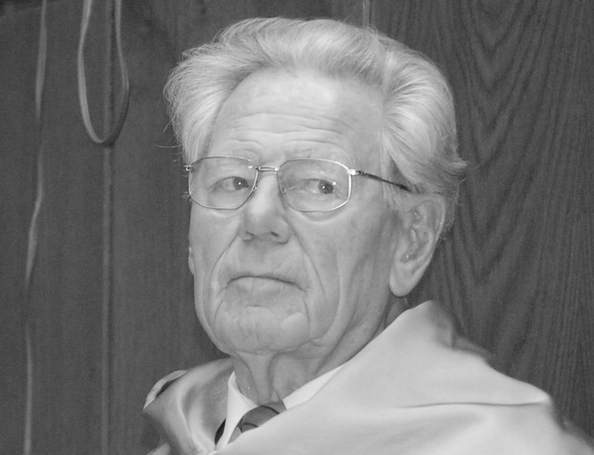
Image source: Wikimedia Commons (UNED Universidad Nacional de Educación a Distancia; cropped; modified)
 License: CC BY 2.0

I know that I should not post anything from Novus Ordo Watch.  This is not reported by any other poster.


Re: Über-Modernist Theologian Hans Küng Dead at 93
« Reply #1 on: April 08, 2021, 01:23:46 PM »
The article above states:  'By the early 1970s, Hans Kung had become a notorious denier of the dogma of papal infallibility as defined at the First Vatican Council in 1870. His 1971 book Infallible? An Inquiry generated untold controversy.'

This is the interesting bit. Like a Fr W. W. Roberts in 1870,. Hans Kung also knew that the 1616 decree defining and declaring a heliocentric reading of Scripture formal heresy was an act of the papal ordinary Magisterium and infallible. But because the history of churchmen since 1820 allowed the flock to believe heliocentrism was proven, the only conclusion was that the dogma of infallibility was itself proven wrong.

In 1633 Pope Urban VIII confirmed this 1616 decree as absolute, irreversible and thus had to be an infallible act. In 1820, when the Holy Office was discussing giving an imprimatur to Settele's book advocating heliocentrism as a scientific proven fact, the head of the Holy Office Fr Olivieri agreed it was infallible, as the record of the time tells us;

Olivieri: ‘In his “motives” the Most Rev. Anfossi puts forth “the unrevisability of pontifical decrees.” But we have already proved that this is saved: ’ ---Retrying Galileo, p.213

So how did he save the decree's papal infallibility and go along with the 'proofs' for heliocentrism. Here is how.

Olivieri: ‘In his “motives” the Most Rev. Anfossi puts forth “the unrevisability of pontifical decrees.” But we have already proved that this is saved: the doctrine in question at the time was infected with a devastating motion, which is certainly contrary to the Sacred Scriptures, as it was declared.’ ---Retrying Galileo, p.213

Yes, he managed to have his cake and eat it, his papal infallibility safe by saying the infallible 1616 decree was against a violent moving Earth, but now that modern astronomers say an orbiting Earth has not a violent movement the Church can now keep its infallible decree but that it does not apply to a non-violent orbiting Earth. All the Popes since 1820 went along with this decision 'without comment.' In fact it was a fixed-sun interpretation of Scripture that was defined as heresy, it had nothing to do with a violent Earth. Olivieri made this up to get the popes to allow heliocentrism as a scientific truth and thus have to reinterpret Scripture accordingly.

As we know from the history of the Galileo case after 1820, because the 1616 decree was taken as proven wrong, there began a history of DENIAL that the 1616 decree was an infallible decree. The dogma now depended on this denial. Lots of ploys and excused were conjured up over 200 years to persuade the world that papal infallibility was NOT proven wrong with the acceptance of heliocentrism.  

But Fr Roberts and Hans Kung did their investigations that showed them the 1616 decree was infallible, and this led them to conclude the Vatican I dogma of papal infallibility was proven wrong by the Holy Office's and papal acceptance of heliocentrism.

In other words it was the acceptance of heliocentrism by the popes since 1820 that led Hans Kung into his heretical rejection of the dogma of infallibility. God only knows what other heresies this led Kung into.


Offline Cryptinox

  • Supporter
Re: Über-Modernist Theologian Hans Küng Dead at 93
« Reply #2 on: April 08, 2021, 01:58:31 PM »
The article above states:  'By the early 1970s, Hans Kung had become a notorious denier of the dogma of papal infallibility as defined at the First Vatican Council in 1870. His 1971 book Infallible? An Inquiry generated untold controversy.'

This is the interesting bit. Like a Fr W. W. Roberts in 1870,. Hans Kung also knew that the 1616 decree defining and declaring a heliocentric reading of Scripture formal heresy was an act of the papal ordinary Magisterium and infallible. But because the history of churchmen since 1820 allowed the flock to believe heliocentrism was proven, the only conclusion was that the dogma of infallibility was itself proven wrong.

In 1633 Pope Urban VIII confirmed this 1616 decree as absolute, irreversible and thus had to be an infallible act. In 1820, when the Holy Office was discussing giving an imprimatur to Settele's book advocating heliocentrism as a scientific proven fact, the head of the Holy Office Fr Olivieri agreed it was infallible, as the record of the time tells us;

Olivieri: ‘In his “motives” the Most Rev. Anfossi puts forth “the unrevisability of pontifical decrees.” But we have already proved that this is saved: ’ ---Retrying Galileo, p.213

So how did he save the decree's papal infallibility and go along with the 'proofs' for heliocentrism. Here is how.

Olivieri: ‘In his “motives” the Most Rev. Anfossi puts forth “the unrevisability of pontifical decrees.” But we have already proved that this is saved: the doctrine in question at the time was infected with a devastating motion, which is certainly contrary to the Sacred Scriptures, as it was declared.’ ---Retrying Galileo, p.213

Yes, he managed to have his cake and eat it, his papal infallibility safe by saying the infallible 1616 decree was against a violent moving Earth, but now that modern astronomers say an orbiting Earth has not a violent movement the Church can now keep its infallible decree but that it does not apply to a non-violent orbiting Earth. All the Popes since 1820 went along with this decision 'without comment.' In fact it was a fixed-sun interpretation of Scripture that was defined as heresy, it had nothing to do with a violent Earth. Olivieri made this up to get the popes to allow heliocentrism as a scientific truth and thus have to reinterpret Scripture accordingly.

As we know from the history of the Galileo case after 1820, because the 1616 decree was taken as proven wrong, there began a history of DENIAL that the 1616 decree was an infallible decree. The dogma now depended on this denial. Lots of ploys and excused were conjured up over 200 years to persuade the world that papal infallibility was NOT proven wrong with the acceptance of heliocentrism.  

But Fr Roberts and Hans Kung did their investigations that showed them the 1616 decree was infallible, and this led them to conclude the Vatican I dogma of papal infallibility was proven wrong by the Holy Office's and papal acceptance of heliocentrism.

In other words it was the acceptance of heliocentrism by the popes since 1820 that led Hans Kung into his heretical rejection of the dogma of infallibility. God only knows what other heresies this led Kung into.
I would like to see the proofs of the decree being infallible.

Offline Ladislaus

  • Supporter
Re: Über-Modernist Theologian Hans Küng Dead at 93
« Reply #3 on: April 08, 2021, 02:30:44 PM »
I'd like to study more WHAT was condemned.  If it was condemned to say that the sun is fixed, then science has since proven that the sun moves ... even by their standards.  Now, I'm a firm believer in geocentrism ... and even lean toward a flat immovable earth, but I might be interested in studying precisely what was condemned and why.

Re: Über-Modernist Theologian Hans Küng Dead at 93
« Reply #4 on: April 08, 2021, 02:46:43 PM »
Now, I'm a firm believer in geocentrism ... and even lean toward a flat immovable earth, but I might be interested in studying precisely what was condemned and why.
Geocentrism and flat immovable earth are different models. One can not believe in both. Geocentrism makes sense. Flat earth does not. The problem I have with geocentrism is that I do not understand how satellites, particularly geosynchronous ones would work in such a model but otherwise it is believable. Flat earth does not make sense to me at all. Though it was fun watching Father Pfeiffer debate the flat earthers among his following.