Cannibalism isn't about Lucifer... it's about protein man... protein!  What Director Mel Gibson Balked At Revealing In "Apocalypto"
What really happened to the headless bodies thrown down the steps of the pyramid?
Texas Arcane
Sep 04, 2026
[REDUX] This was also published as a paid article a year ago and I suspect has been pirated by many people who wanted to read it. I am making it free to all subscribers, it has been requested many times. The real world is nothing like what you have been told. It has nothing at all to do with klownworld — which spends vast fortunes keeping real world history out of the curriculum.
P.S. To some people, every idea is brand new. Mayan cannibalism is the worst kept secret in academia the past century and has become a cliche as politically incorrect knowledge. Even typing in the word “source” will get you permanently lifetime banned from this site forever, no saving throw. You will die alone in a pathetic hovel surrounded by fanbois VAULT-CO merchandise weeping and gnashing your teeth at how you got your candy-ass banned forever from the site. I’m much brighter than you are thinking right now. You think you are good at it but I am much better. I KNOW WHO YOU ARE — AND YOU WILL BE BANNED. If you are serious, purchase the books I mentioned and read them. Otherwise shove off, this site is only for people who matured normally with secondary sɛҳuąƖ characteristics. Your parents have little choice in the matter but it is different once you leave the house and begin to encounter strangers.
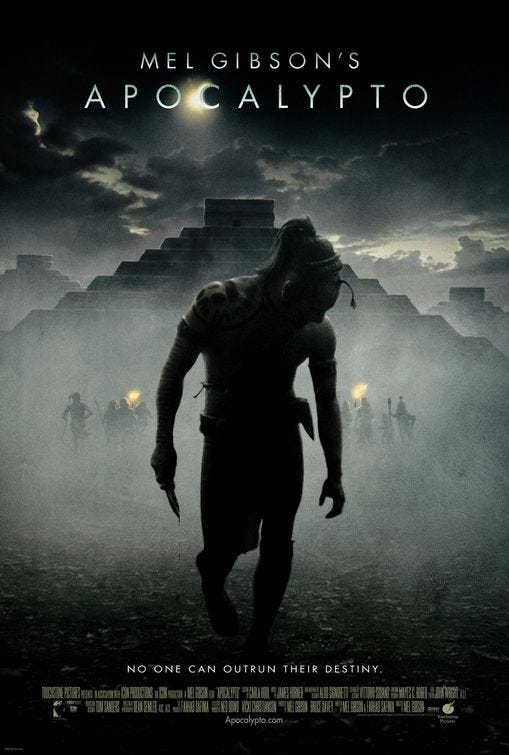
It was a truly amazing film that did it’s very best to be authentic … but some of the truth was so horrible it could not be displayed by the director on screen.
The Incan and Mayan empires were unrelentingly satanic for the duration of their entire existences.They could not solve their protein supply problems for their large populations by domestication or cultivation of animals. Apologists have a million different reasons that everything else was “too hard.” They had to eat people captured from tribes outside in order to provide a sustenance to their own people. This disqualified them from being called a “civilization.” It was more like an exercise in desperation with too many people crowded into a dense metropolis and no serious plan to feed them.
Academics have carefully concealed the truth from the popular imagination for the sake of political correctness and to protect delicate sensibilities from the truth about these supposed “societies.”The conquistadors were brutal, ruthless and savage men. We should not be surprised that upon meeting the brutal, ruthless and savage native cultures in South America they proceeded to raze the entire country driven by their lust for the gold that was hoarded in these regions.The evil power of the ruling Incans met with the even more evil power of the conquistadors and the Incans were destroyed by the invaders. Bad people were overcome by even badder people, which occurs again and again throughout history.Mel Gibson, the producer and director of the movie Apocalypto, had to cut away from the bodies tossed down the steps of the pyramid because he didn’t dare show how they were disposed of when they reached the bottom - not as he suggested when he showed piles of beheaded bodies painted blue piled in a pit. That never happened.At the foot of the pyramid a huge throng of people caught the headless corpse and immediately roasted it above a fire to eat it. There were kitchens that ran all day long that served endless starving hordes cooked human flesh. There are some things so grotesque that even the director’s nerve failed at this point.
I first read the truth in the book “The Invented Indian” by Clifton James, a marvelous exposure of the romanticization of indian culture in North America as a sort of mystery religion cult created by the subsequent generations of white colonists. After the indians had been driven back and out of these environments, the new settlers proceeded to craft a fantastic narrative mythologizing the indians who were no longer there. The very first thing they retracted from these histories was the rampant cannibalism.A large part of the information in the article below is derived from “The Invented Indian” by Clifton James and “Cannibals and Kings” by Michael hαɾɾιs, both books I own in hardback and brought with me from Australia in my personal library.
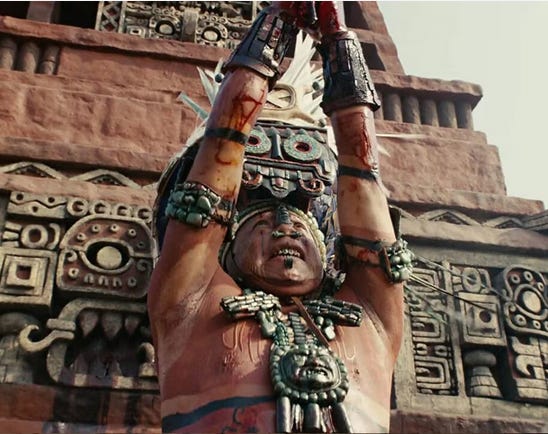
Mel Gibson captured some of the nightmare but omitted the most important part of this monstrous practice.
The Aztec Empire, flourishing in the Valley of Mexico from the 14th to the 16th century, remains one of history’s most enigmatic civilizations. Renowned for their monumental pyramids, intricate cosmology and sophisticated urban planning the Aztecs are perhaps most infamous for their practice of human sacrifice. At the summits of towering pyramids like the Templo Mayor in Tenochtitlan, priests ritually slaughtered untold thousands of captives in a single day … likely millions over the course of their reign, offering their hearts to the gods “Huitzilopochtli” and “Tlaloc.”The ritual did not end with the extraction of the still-beating heart. The horror only began there. The dismembered bodies were cast sequentially down the pyramid steps, where they were ritually consumed in gigantic feasts over coals by priests, warriors, and select members of society at the structure’s base. This cannibalism was an inevitable response to the failure of the ruling class to produce any other source of protein that could feed them. Their lack of innovation or enterprise in organizing mass production of food meant that this ghoulish dinner party was all they could think of to fill their stomachs.Central to this story is the hypothesis that Aztec cannibalism was not driven by religious fervor but by an acute inability to supply sufficient protein to their uncontrolled burgeoning population. The Aztecs failed to domesticate animals in significant numbers, leaving them without reliable livestock for meat. Their agriculture, while innovative, prioritized staple carbohydrates over protein-rich foods - and even those had to be heavily processed when harvested. In a society of up to 25 million people squeezed into a high-altitude lake basin, human flesh became the most efficient, scalable protein source. This conclusion draws on archaeological evidence, historical accounts from Spanish chroniclers like Bernal Díaz del Castillo and Diego Durán, and modern anthropological interpretations to substantiate this claim. By examining the Aztec domestication failures, agricultural limitations, nutritional imperatives and the mechanics of pyramid cannibalism, we uncover a civilization sustained by necessity’s grim calculus.
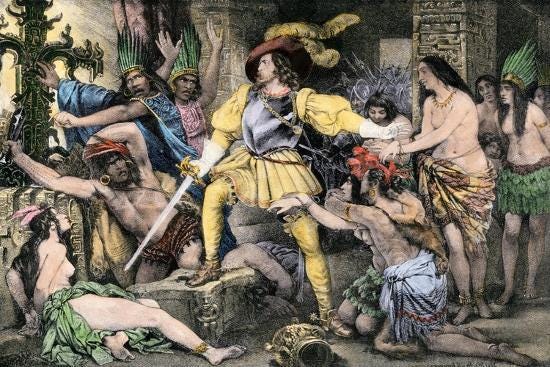
After conquering Mexico City, Cortez ordered an immediate halt to all human sacrifices. Strange for those evil conquistadors but I guess they had more mercy than the natives did.
The Mesoamerican environment posed unique challenges to animal domestication and the Aztecs epitomized this failure. Unlike the Eurasians, who harnessed horses, cattle, pigs, sheep, and goats into symbiotic food systems, Mesoamericans had few candidates for domestication. The dog (“xoloitzcuintli”), a pre-Aztec import from Asia around 3000 B.C., was the primary domesticated animal. Archaeological digs at sites like Teotihuacan reveal dogs were bred for meat - with isotopic analysis of bones showing they contributed marginally to diets (perhaps 5-10%) of protein intake in elite households. However, dogs required grain feed, competing with human food supplies … and their population never exceeded tens of thousands empire-wide. What was odd was that they were clearly encountered initially as pets or companions, before the majority of Aztecs decide to make them into a food source. History repeats itself it appears.Turkeys (“huexolotl”) were domesticated by 1500 B.C., providing eggs and meat, but yields were low. A single turkey hen lays 10-15 eggs annually, far below the 200+ of a domestic chicken. Zooarchaeological data from Aztec middens indicate turkey bones comprise less than 2% of the bone remains, suggesting sporadic consumption. The Muscovy duck, introduced later, was ornamental rather than agricultural. Larger candidates like deer, peccaries, tapirs and jaguars resisted domestication due to behavioral traits: deer flee captivity, peccaries are aggressive and disease-prone … and jaguars demand vast territories. Genetic studies confirm no selective breeding occurred as is required by all domestication.Wild game hunting supplemented diets but declined with deforestation. Fish from Lake Texcoco offered protein but chinampas (floating gardens) favored maize over aquaculture. Armored catfish and axolotls were harvested, yet annual yields (estimated at 500,000 kg from codices and tablets) fed only urban elites. Insects like maguey worms and grasshoppers provided 20-30g protein per 100g but were seasonal and labor-intensive. Without herd animals, Aztecs lacked the caloric density of Old World pastoralism. A cow yields 200kg meat annually; a dog, just 5kg. With a population density of 100 persons/km² (six times Eurasia’s ratio) the protein gap was insurmountable. Chroniclers like Sahagún noted warriors returning from hunts with “meager hauls,” underscoring reliance on alternatives. Thus, the Aztec zoological impasse created a protein deficit estimated at 20-30g per capita daily, below the 50g required for adult males.Aztec agriculture was a marvel in good years … chinampas produced 7 tons of maize per hectare annually, sustaining 200kg/person/year … but it was protein-poor. Maize, the dietary staple, derives 70% of calories from carbohydrates with only 9g protein per 100g, much of it incomplete without “nixtamalization” (lime processing) to boost it as nutrition. Beans and squash complemented it in the “Three Sisters” system, adding 20g protein/100g, but land allocation favored maize: 80% of fields per codices. Amaranth seeds offered 14g protein/100g but were never capitalized on as a crop, which made them another lost opportunity right beneath the noses of the ruling class.Chinampas covered 20,000 hectares around Tenochtitlan, yielding 10 million tons of food yearly yet protein output lagged. Calculations from ethnohistorian Michael Coe show maize-bean diets provided 40g protein/day, sufficient for sedentary folk but inadequate for warriors and laborers expending 3,000+ kcal daily. Soil salinization from lake shrinkage reduced yields by 20% in the 15th century, per examination of soil cores. Tribute systems funneled 7,000 tons of food annually to the capital but 60% was maize. Famine records in the Codex Telleriano-Remensis docuмent shortages every 5-10 years, exacerbated by droughts. There is no evidence of any innovation in response to these regular crises … no advances in farming or domestication.Without draft animals, plowing was manual; no manure fertilized fields en masse. The Aztecs never discovered the shoulder plow. This carbohydrate-heavy diet caused pellagra-like symptoms with skin lesions, diarrhea and inflammation. They discovered early on these conditions were mitigated somewhat by cannibalism’s complete proteins. Anthropologist Marvin hαɾɾιs’s protein hypothesis posits that sacrifices filled this void: a minimum of 20,000 victims/year (per Durán) yielded 8,000 tons of meat, or 1kg/person annually which still only met 10% of needs, indicating it is a very conservative figure.Isotopic analysis of Aztec skeletons from Tlatelolco shows elevated nitrogen-15 from human tissue, confirming cannibalism’s dietary role. Thus, agriculture’s protein shortfall, combined with domestication failure, made human flesh their only option.In a militaristic empire demanding peak physical performance, protein was paramount. Aztec warriors, marching 50km/day with 20kg gear, required 1.5g protein/kg body weight. Deficits led to muscle wasting, reduced fertility (birth rates ~30/1,000 vs. 40 in pastoral societies), and weakened immunity which is evident in skeletal pathologies showing 15% anemia rates. Cannibalism provided high-quality protein: 20g/100g lean tissue, rich in essential amino acids absent in maize.
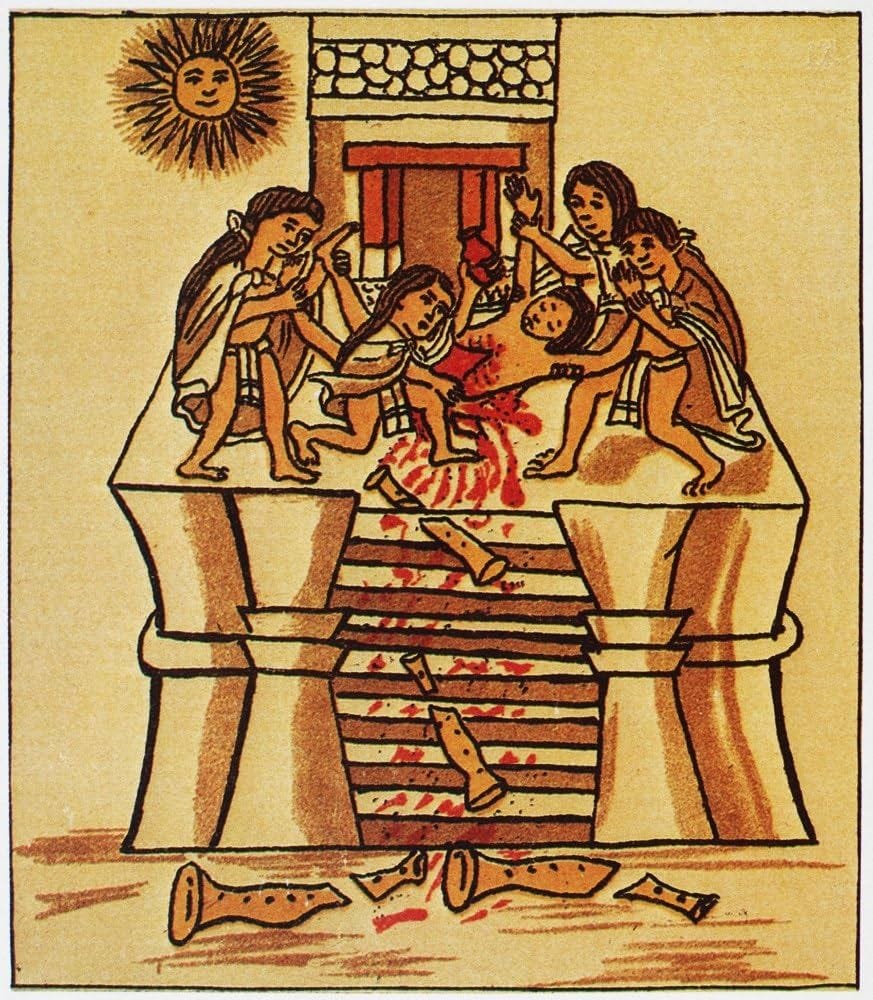
Thousands of drawings and illustrations by eyewitnesses are littered throughout the history books. Forbidden to teach in our schools for fear of upsetting secular religions.
Historical texts like the Florentine Codex describe post-sacrifice feasts: thighs distributed to warriors, torsos to priests. This was merit-based: captors ate their victims’ limbs, reinforcing hierarchy. Nutritional modeling by Bernard Ortiz de Montellano estimates 50,000kg protein from sacrifices sufficed for 200,000 elite males. Without it, societal collapse loomed; famines killed 10% in 1450-1454, per annals.Religiously, cannibalism echoed creation myths; gods sacrificed themselves for humanity, who reciprocated. It recycled tribute prisoners (often farmers from conquered polities who could have instead been growing crops) into food as a direct resource. This is very telling in it’s differences from Europe, where such people when taken captive were seen as far more valuable alive where they could conduct agriculture under feudalism. All the Aztecs could see in other men was their place on a spit over a barbecue.Spanish observers like Díaz del Castillo witnessed “tables laden with human limbs” at pyramid bases, grilled or stewed with chili. Analysis from La Ventana cave reveals human myoglobin, proving consumption of fats from people. This system however horrific stabilized nutrition, enabling empire expansion from 5,000km² in 1428 to 200,000km² by 1519. That of course meant more captives, more meat. This cycle is the absolute opposite of European civilizations, where people acquire more worth as the society gets more complex, not less.The Templo Mayor, 60m tall, epitomized this fusion of rites and rations. Sacrifices peaked during their “New Fire Ceremonies” with an unbelievable 80,400+ victims in 1487, per temple inscriptions (disputed but indicative). Bodies tumbled 30m to the base, where coamizcalpantecuhtli (”eater of the defeated”) oversaw division. The Florentine Codex details that their hearts were burned, blood used to paint idols, flesh portioned to people lined up at the fire … priests got 20%, warriors 50%, nobles 20%, commoners scraps.Feasts occurred in tecpan (palaces) or open plazas, with 1,000+ attendees. Meat was wrapped in tamales. Pyramid bases, paved with skulls (tzompantli held 136,000), doubled as abattoirs for cutting them all up. Archaeology unearthed 7,000 bones at Templo Mayor, 60% showing cut marks, 20% cooked and bones cracked open for marrow. Trying to imagine the horror of all this is likely to make most Europeans feel queasy.
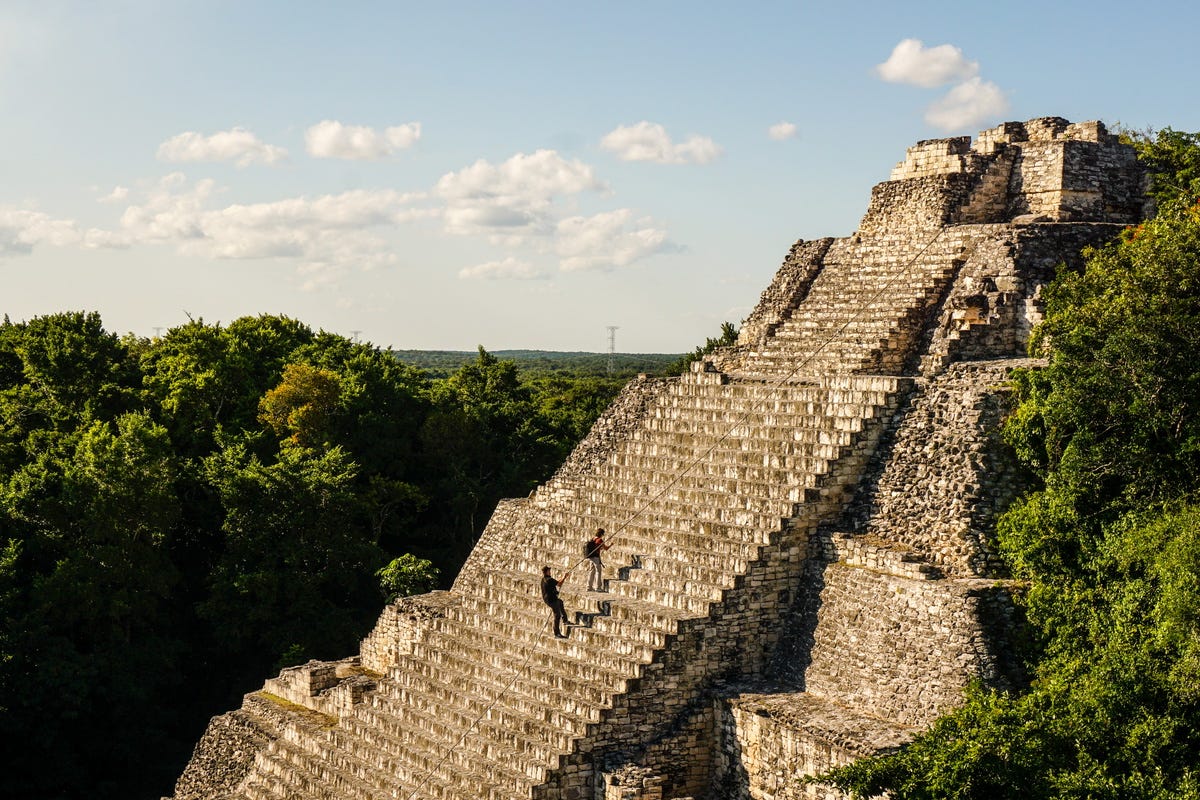
The tourists who claim this “civilization” was beautiful and advanced are the ones that don’t know anything at all about it. Those steps passed the bodies of a million beheaded captives butchered like animals that they are climbing up.
Without alternatives, any break in the executions meant starvation … codices note “flesh hunger” riots quelled by sacrifices. Some Spanish sources claim a quarter of a million captives were eaten in a single year after they had arrived.Failing to domesticate animals left a protein void; agriculture’s maize monopoly exacerbated it. Sacrifices plugged the gap, yielding 10% of needs while reinforcing ideology. Post-conquest, livestock introduction ended it at once of course. European pigs imported in for farming meant that Spanish pigs supplied 50kg meat/person/year by 1600, collapsing the need for cannibalism instantly.As hαɾɾιs argued, “cannibalism was good for the Aztecs.” Unfortunately, it meant unending monstrous horror for everybody else in South America. The only thing that ended this nightmare was the arrival of the Conquistadors, which in retrospect could hardly be painted as anything but bad luck for the Aztecs and the liberation of the entire population of South America who suffered agonizing slaughter and unending madness under their regime.The movie “Apocalypto” tried as hard as possible to depict this empire accurately but there were some things Mel Gibson could not show honestly for fear of the firestorm he could ignite when the public finally learned the truth about the previous populations and how they lived before the arrival of the Spanish.

 Topic: Apocalypto movie (Read 161 times)