Now we turn to Church architecture.
http://www.sacredarchitecture.org/articles/dont_blame_vatican_ii/Don’t Blame Vatican IIOur problems began some decades before the Second Vatican Council convened: they began with the embrace of modernist architectural principles by contemporary architects and, more disastrously, by the liturgical “experts” who have insisted on laying down the rules and regulations for all new Catholic churches built in America.

A good example can be found in a small, but particularly illustrative little booklet published in 1952 by the Liturgy Program at the University of Notre Dame called Speaking of Liturgical Architecture.
Although published in 1952, the lectures contained in Speaking of Liturgical Architecture were actually delivered several years earlier, during the summer of 1947, at “the first liturgical summer school at the University of Notre Dame.”4 Given that these lectures were delivered some fifteen years before the Second Vatican Council began, whatever faults Fr. Reinhold may be guilty of, it would be something of a stretch to blame them on the Council.
And those ideas are identifiably and undeniably modernist.
Form Follows Function: Functionalism and Modern Church Architecture

 The Ideal Interior of the Modern Church: Church-in-the-Round
“[T]he ideal parish church is the one in which the architecture creates the ideal setting for full participation.” Now, the notion of
“full and active participation” is one that most people associate with the Second Vatican Council. But here it is already in 1947.
Fr. Reinhold proposes for new churches. The “ideal setting” for a church, according to this pre–Vatican II liturgist, is the fan-shaped congregation, or what is sometimes called “church-in-the-round.”
 http://szakralis.wordpress.com/english/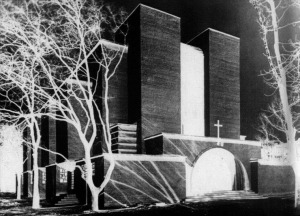
The thousand year old Hungarian Christianity has played a dominant role in the liturgical reformation movement: the 34th International Eucharistic Congress took place in 1938 in Budapest. In the first third of the XX Century rather significant construction works have been done by the Catholic Church in Hungary. The modernist works, formed in the progressive style of the era, evangelized the magnitude of the church and its role played in the social life of Hungary between the two world wars by following the most updated principles both in architecture and in liturgy.[1] Several churches have been built with the interpretation of the early-Christian traditions, showing progressive liturgical principles and new arrangements of the architectural function – all this well before the II. Vatican Council. (Fig. I)
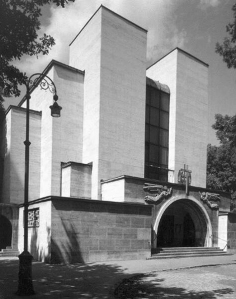
Figure I : Budapest-Városmajor, roman catholic church, 1932-1933. Architects: Aladár and Bertalan Árkay
http://www.rpinet.com/wforum/index.php?t=tree&th=3991&rid=0&S=5a070f345ee178c096b26b0e819e088b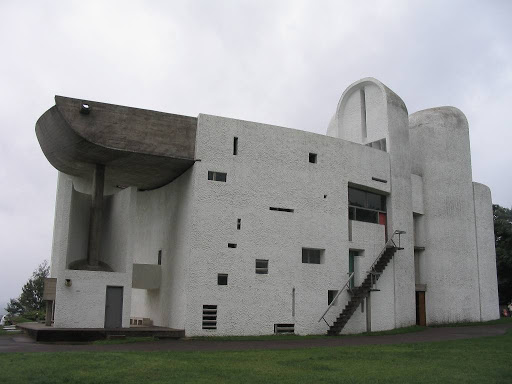
Liturgy and Architecture (1961). The foreward is by F.W. Dillistone, then-Dean of Liverpool.
Liturgy and Architecture reads like a handbook, although the author is at pains to deny that this is his intent. The book's premise is that the Church of England had lost an opportunity to build proper new churches after World War II, sticking with a tried-and-true program of Victorian piles; whereas on the Continent, great men like Le Corbusier, Dominikus Bohm, and Fritz Metzger had been building radically traditional/honest/pastoral/fill-in-the-blank churches for decades, and it's high time England got onboard. Hammond comments on dozens of new church plans (included) to illustrate how they succeed or fail, in his view, to embody the goals of the Liturgical Movement.
Some of the plans that merit praise in Hammond's view would rightly be considered atrocious by any of the many friends of the NEW Liturgical Movement. Yes, the pilgrimage chapel at Ronchamp makes an appearance -- you knew it would -- but there are others as well. Parabolas, reinforced concrete arches, butcher-block altars, octagonal churches, asymmetrical naves... all these familiar postmodern notes and more find approval in this book, which again, was written in the late 1950's (the UK printing date was 1960). Look in horror on the church plans and photographs that would inspire "wreckavators" and professional liturgists for decades to come.
Below are a few choice quotes from the book. As you're reading them, bear in mind what Mark Allen Torgerson has noted in his own book, An Architecture of Immanence (p. 74): "Hammond and his group produced materials that integrated liturgical renewal with modern church design, all in an ecuмenical atmosphere. Their work was widely distributed and read in Europe and the United States, helping to set the stage for far-reaching reforms that would emerge from Vatican II."
Quotes from Peter Hammond's Liturgy and Architecture (1961):
"It is fast becoming a commonplace to observe that western Christendom is in the throes of a new Reformation. Not since the sixteenth century has there been such a calling in question of received traditions or such a ferment of experiment. The sources of Christian tradition are being examined afresh in the light of modern biblical and historical scholarship. Theology has begun to shake off the influence of scholasticism and is rediscovering its biblical, patristic and liturgical roots. There is a new sense of meaning of the Church as the people of God and the body of Christ. A deepened understanding of the eucharist, and its social implications, has transformed the life of many a parish and has effected something of a revolution in the celebration of the liturgy itself."
(p. 13)
"In a growing number of churches during the last few years the altar
has been brought forward, away from the east end of the church, and
the ministers face the people across the altar. Such an arrangement
of the sanctuary has been restored not simply because it is more
primitive but because it embodies, as the medieval layout does not, a
biblical understanding of what the Church is and what it does when it
assembles on the Lord's Day."
(p. 26)
"Monumental crosses, mural paintings and assertive decoration of any
kind can detract from the primacy of the altar just as effectively as
the sculptured reredoses, statuary, candlesticks and vases which have
so often in the past degraded the holy table of the eucharistic
banquet into a pedestal. The cardinal principle to be observed in the
decoration of the house of God is that all decoration should be
related to liturgical function; it must never become an end in
itself."
(pp. 38-39)
"The problem [of renovation] is most acute where a congregation has
inherited a late-medieval parish church, or one planned in conformity
with the principles of the Cambridge ecclesiologists... How, in such
a building, is the Christian layman to recover his proper liturgy?
How is he to be transformed from a passive spectator into an active
participant in the eucharistic action?"
(p. 138)
"It indeed has to be recognized that there is sometimes no wholly
satisfactory solution to the problems posed by medieval or Gothic
revival churches. It is often necessary to choose between modern
liturgical and pastoral needs, on the one hand, and aesthetic and
antiquarian principles on the other. The two cannot always be
entirely reconciled. It may well be necessary to do violence to the
architectural character of the domus ecclesia in order to build up the
ecclesia, the spiritual house constructed of living stones, which
gives the building its meaning and purpose."
(pp. 138-139)
"Many of these German adaptations (of late-medieval or Gothic
churches) have involved the transformation of cruciform churches by
removal of the high altar from the eastern arm of the building to a
new position in the crossing."
(p. 139)
"Among the more spectacular transformations of nineteenth-century
churches are several which have involved the demolition of the whole
north wall of an existing, or damaged, nave and the building of a new
nave and sanctuary at right angles to the original axis of the
church."
(p. 140)

 Topic: And you thought it all began with Vatican II (Read 9488 times)