Indeed it does. My son took his family to visit. It is impressive. The sad thing is that folk will come to an understanding of the world and creation that is not the Catholic Understanding.
The museum is one offshoot of Answers in Genesis which was started by the Australian protestant, Ken Ham. It was through Answers in Genesis that our family came to understand the importance of the issue of the evolution / Creation. Then by the grace of God, we discovered Gerry Keane’s exposition of the Catholic doctrine of Creation.
I have searched Kolbe Foundation website and it seems they have no specific outreach into the education of children, through literature and other modern means. I believe that this is a serious lack for the Catholics.
I hope that St Louis, and other brightminds, can make some inroads into this crucial issue.
Glad to see that you share my interest in this subject. I hope to use a combination of entertainment and information to make the inroads you discuss here.
I've put some thought into what species I would feature first on the website, and I will send a draft list to Mr. Owen when I get the time to pitch the idea to him. One dinosaur that I am definetly considering (alongside beloved classics like
Tyrannosaurus,
Triceratops, and
Stegosaurus) is the relatively recently discovered
Dreadnoughtus.
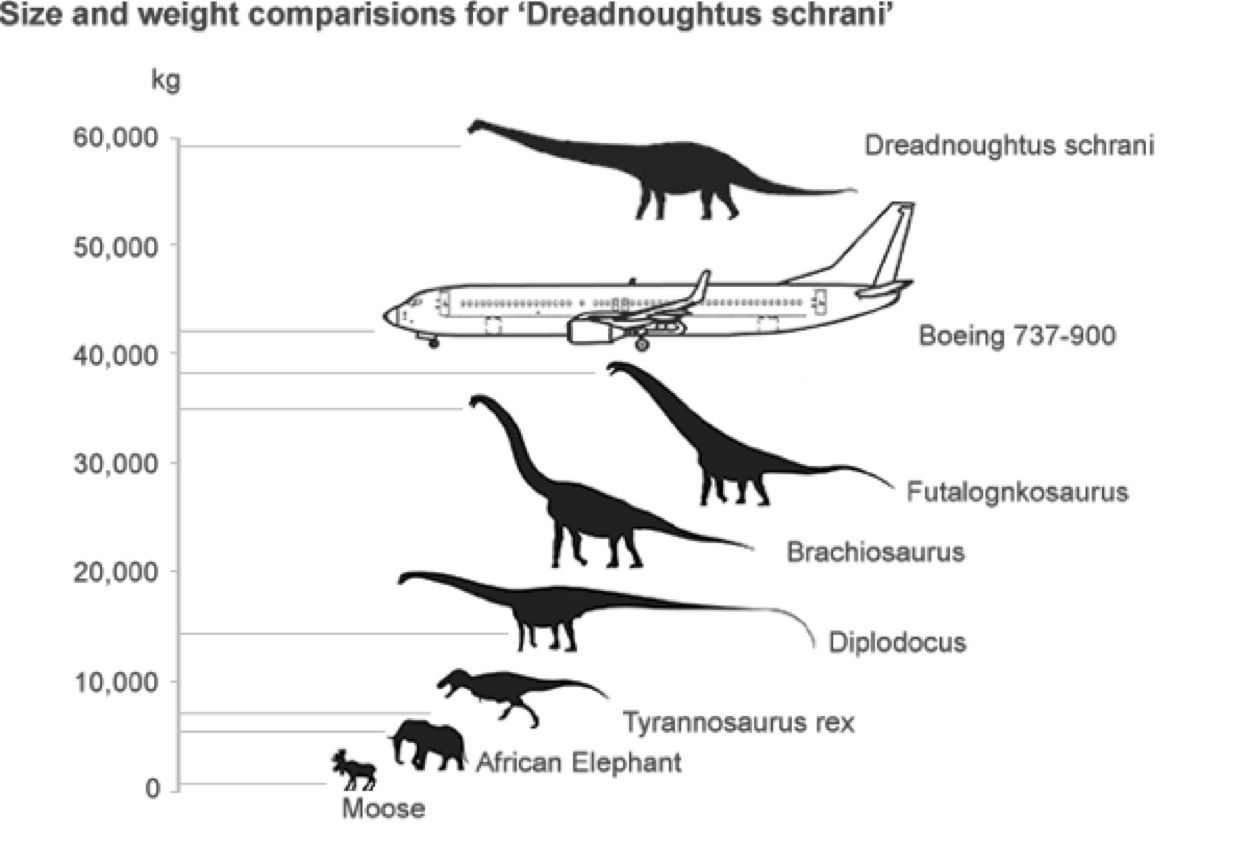
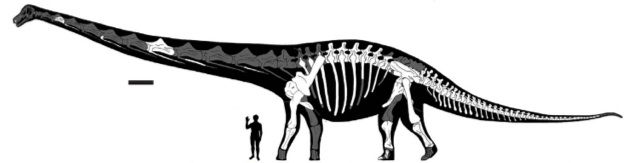
Not only is a fascinating animal to imagine in terms of its scale, but there's a greater story to be told about it, as this excerpt from the Answers in Genesis
article on the creature demonstrates:
Catastrophically and Completely BuriedDreadnoughtus was evidently struck down and rapidly buried in the prime of life. The titanosaur beside it suffered a similar fate. [Paleontologist Kenneth] Lacovara says, “It appears that both individuals died and were buried rapidly after a river flooded and broke through its natural levee, turning the ground into a soupy mixture of sand, mud and water.”
2Lacovara says that there is a geologic reason most titanosaur fossils are so fragmentary:
To date all of the real giants that we’ve known about have only been known from very fragmentary remains. And there is a geologic reason for this: If you can imagine an animal the size of a house and that animal dying and keeling over on a hard flood plain somewhere at that moment very little of its body is in contact with the earth, so very little of its skeleton actually has the opportunity to enter the fossil record before it’s either scavenged or weathered away.4
Lacovara rightly acknowledges the necessity of rapid burial in the preservation of fossils. But what kind of river catastrophically destroyed and completely buried a couple of dinosaurs the size of two London buses? Another far more catastrophic source of water-borne sediment—sufficient to drop on these two strapping young dinosaurs like many tons of bricks—is easily found in the pages of the
Bible’s book of
Genesis chapters six through nine, a historical record of the Flood that catastrophically covered the Earth.
The fossil record contains a rich record of the rapid burial of billions of animals and the order in which they were swept away and sorted or simply buried where they stood. Only the application of worldview-based interpretations of scientific data interpret the geologic layers like those in which these dinosaurs were found as
millions of years old.

 Topic: A Dino-Themed Educational Project Idea (Read 6553 times)